








What You Can Do For Wildlife
There’s a role for everyone.
- Learning about wildlife is an important first step in helping wildlife.
- A great deal can be done to make land—whether it’s a small lot in a big city or a vast farm on the Prairies—a haven for wildlife.
- Keeping track of numbers of a particular bird or mammal in Canada and monitoring the state of health of each species is important.
- Canada’s special-concern, threatened, and endangered species are particularly in need of our help.
Learning about wildlife
Learning about wildlife is an important first step in becoming involved. Getting outside and becoming an observer of life around you is a good way to begin. Try to incorporate nature hikes to a nearby park, wetland, or woodlot into your regular schedule.
You can also learn about wildlife from books, videotapes, and, in the case of birds, audio tapes. Every time you visit the library, bring home one book on wildlife, and encourage your family to read it. Taking up a quiet hobby that keeps you outdoors, like gardening, hiking, or beachcombing, increases your chances of seeing and learning about wild plants and animals.
Children can learn about wildlife at school through programs such as Project Wild, offered by the Canadian Wildlife Federation. Find out more on the CWF Education page.
Becoming a member of a naturalist club is a particularly good way for children and adults alike to learn about wildlife and become involved in conservation. Naturalists visit wetlands on warm spring evenings to learn which frogs and toads make which calls. They conduct birding walks at dawn during the breeding season and take spring wildflower walks and fall mushroom forays. Naturalist clubs are also good places to meet other people interested in nature. Or if you prefer, you can learn about wildlife as a volunteer with a wild bird clinic, bird banding centre, or nature education centre that provides on-the-job training for volunteers.
Individual choices to help wildlife
Here are some ideas for helping wildlife in your daily life:
- Keep your domestic animals under control. Respect local leash laws. Dogs running free can harass and kill wildlife. A bell around the neck of an outdoor cat gives birds more of a chance. Domestic cats kill millions of songbirds a year.
- Use cars less. Cars pollute. As well, a lot of wild animals are killed trying to cross busy highways.
- Buy food grown without herbicides and pesticides. This supports farmers whose land is the most “wildlife friendly.” Buy other “green” goods, such as ecocertified lumber and papers, for the same reason.
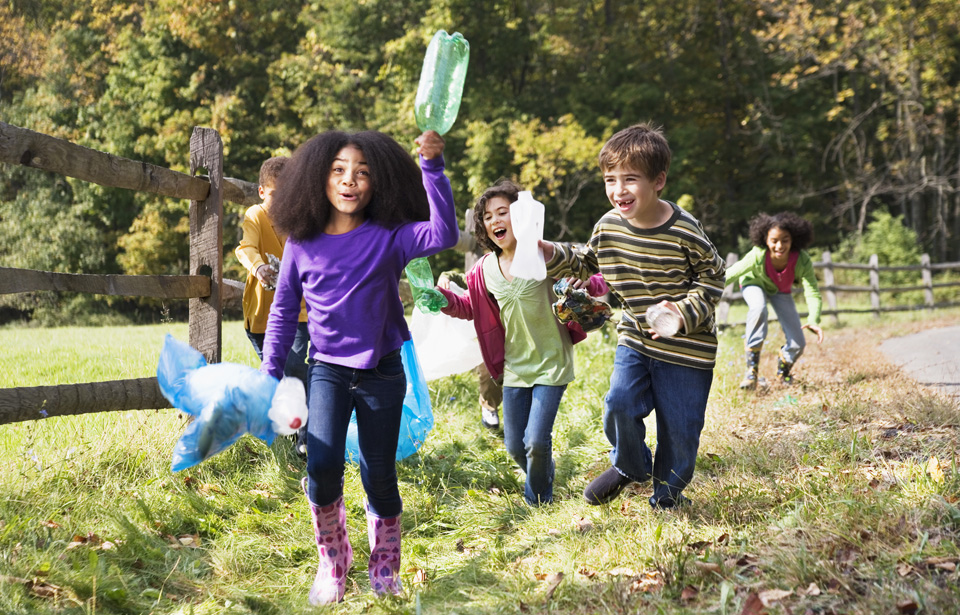
- Reuse or recycle your plastic products and avoid products with disposable plastic packaging. Animals have been known to die after swallowing plastic debris or becoming entangled in plastic six-pack holders.
- Watch what you put down the drain or into the regular garbage. Careless disposal can cause harm to wildlife, such as fish. Contact your municipal office to find out how you can dispose of antifreeze, paint, varsol, used oil, and spent batteries.
- If you find a dead bird with a band on its leg or spot a live bird with a neck collar, wing tag, or other marker, send the band or report the marker to the Canadian Wildlife Service’s Bird Banding Office by calling 1-800-327-2263. Knowing where bands are found helps scientists identify the habitats used by birds.
- Buy the Wildlife Habitat Canada conservation stamps and prints. Proceeds go to habitat preservation.
- When you travel, be ecologically responsible. Avoid waste- and pollution-producing holidays. Support countries that are saving their forests and managing their coral reefs and beaches well.
- When you travel, do not contribute to the profits of people who capture or kill endangered species. Learn about the regulations of the Convention on Trade in Endangered Species of Wild Fauna and Flora(CITES) and follow them when you travel. CITES makes it illegal to import goods made from endangered species, such as skins of leopards and ivory from elephants.
- If you are a hunter or angler, use non-lead shot and fishing gear so birds ingesting spent shot or lost sinkers will not be poisoned by lead. Follow the regulations regarding seasons and catch limits and report poachers through your provincial or territorial wildlife agency or the RCMP or Crime-stoppers. Develop your identification skills to avoid killing endangered species (e.g., the Eastern Harlequin Duck) and teach other hunters to do the same. Be sure of your game and avoid wastefulness. Practise catch and release of fish if you are not going to eat them.
- When you boat, stow your trash and dispose of it safely or recycle it ashore. Never throw it overboard. Report suspicious-looking industrial discharges, fish kills, and other environmental problems to your provincial, territorial, or federal wildlife agency. Do not spill gas and oil into the water. Avoid stirring up bottom sediments with propellers, and keep personal watercraft out of shallow areas that are critical habitat for spawning fish, aquatic plants, and aquatic invertebrates. Keep speeds down to avoid creating a wake that could disturb shoreline habitat.
- When fishing, do not dump minnows into the water. Alien fish species and zebra mussels can be spread in this way, upsetting the balance of ecosystems. Follow locally posted guidelines about cleaning the hull of your boat before moving it out of an area infested with zebra mussels.
- When camping, heed the forest fire risk notices before lighting campfires, do not dump dishwater directly into lakes and rivers, and keep noise levels down.
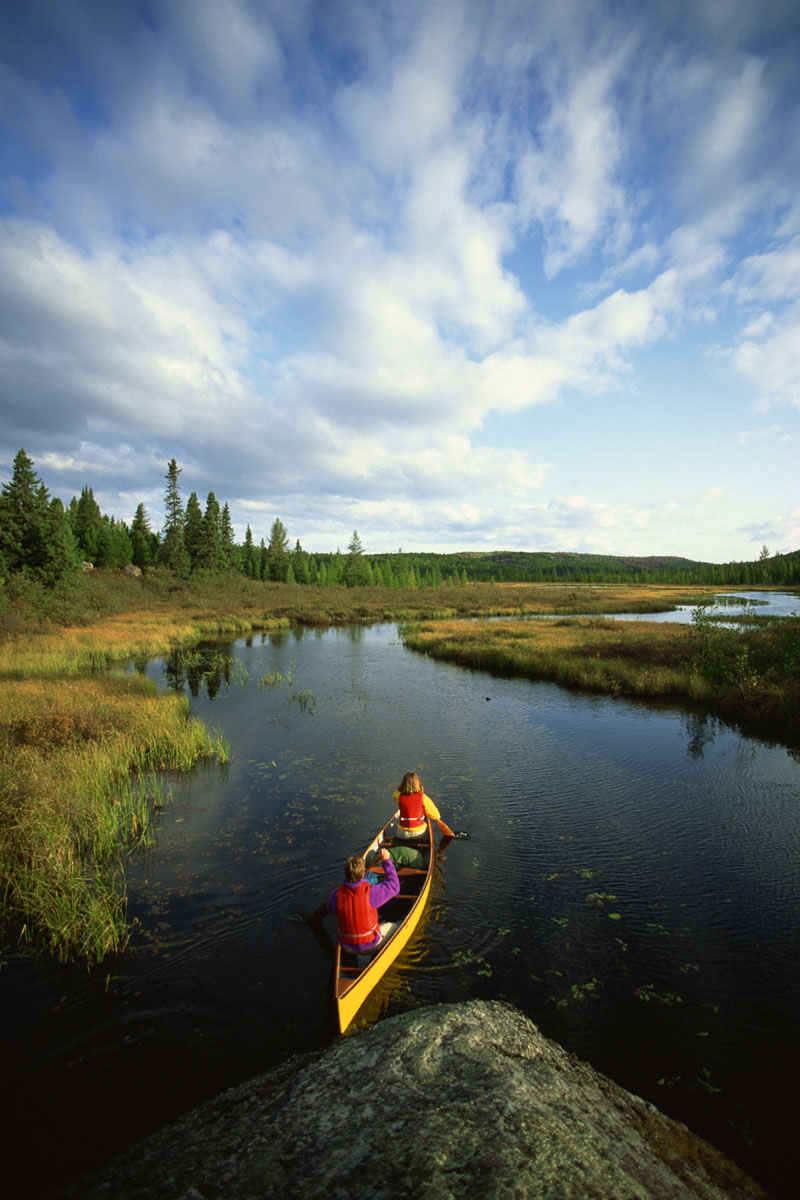
- When choosing outdoor recreational activities, consider cross-country skiing and canoeing instead of snowmobiling and motor boating. These activities are quieter so they don’t disturb wildlife, and they increase your chances of seeing wildlife. Remember that loud noises in winter disturb animals at a time when they need to rest and conserve energy.
- Participate in the land-use planning process in your community to ensure that wildlife habitat, especially habitat for endangered species, is protected.
- Teach others what you know.
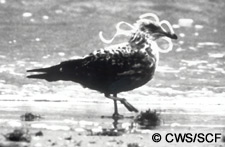
Preventing and cleaning up pollution will help wildlife. This gull has become entangled in a plastic six-pack holder.
The special role of the landowner
Whether your land holdings are a small lot in a big city or a vast farm in the Prairies, there’s a great deal you can do to make your land a haven for wildlife.
Abandoned farmland or a bare city lot can be improved by planting to attract wildlife. Plant a mixture of species so that many different types of animals can find food and shelter. In general, planting trees is a good idea, but not every open site should be forested. Before planting trees, make sure that you are not eliminating an important natural opening that supports diverse and unusual plants. Natural prairies have been destroyed through thoughtless reforestation projects in parts of Canada. Ask a naturalist or botanist to look your land over before you begin.
On forest land, link forest patches with corridors of trees and shrubs to allow wildlife to move under cover. Remember to use native species. Our songbirds take more readily to a familiar thicket of native dogwood or willow than to introduced, exotic species such as weeping mulberry. Native species provide food as well as cover, and are not as likely to dominate other native plants as introduced species often do.
Planting trees and shrubs is particularly critical along bare river and stream banks and lakeshores. Vegetation will prevent the banks from eroding into the stream, where the soil can destroy fish spawning beds. It will also absorb agricultural chemicals, thereby preventing them from going into the water where they can poison stream animals and overfertilize the aquatic habitat. Planting hedgerows of trees and shrubs around agricultural fields also provides sheltered corridors for wildlife to travel along and helps to prevent soil erosion. (However, hedgerows can be deathtraps if planted next to areas of intensive pesticide use.)
When cleaning up your property, think about how wildlife might use it. Rabbits, rodents, and birds will use brush piles for cover. Manage your woodlot with wildlife in mind. For example, standing dead trees or “snags” play a wide variety of wildlife roles. Insects live in the wood; fungi break it down. Fungi and insects provide food for other creatures. Pileated Woodpeckers will visit the snag to feast on the insects or make nesting holes. These, in turn, eventually become homes for cavity-nesters like other woodpeckers, Wood Ducks, flying squirrels, and raccoons. Even after the tree falls, it has an important role to play for wildlife: salamanders, small rodents, and a variety of invertebrates and other organisms will live under it. Ants will live in it. If the tree falls over a stream, it will provide shade and cover for fish.
Because old trees are still wrongly considered useless and inherently dangerous by many people, there can be a shortage of snags for wildlife in some areas. Nest boxes provide a short-term solution to this problem, replacing the nesting cavities that snags would provide. Eastern Bluebird and Wood Duck populations have come back in North America thanks to hundreds of landowners who provided nest boxes for them. You can also put out boxes for chickadees, wrens, and kestrels; roosting boxes for bats; and posts with platforms for raptors. The long-term solution is the preservation of a mixture of healthy, dying, and dead trees in managed forests and elsewhere, as long as the snags are not a hazard to people or property.
Prairie farmers have plenty of opportunities to improve the wildlife value of their land. Thousands of prairie sloughs have been drained by farmers over the past century, especially during the last 30 years, and hedgerows have been removed. One incentive for this was to enable big modern machinery to operate in straight lines rather than having to go around water areas and woody vegetation. As well, government support programs were based on the amount of ploughed land, so that it paid to increase acreage, even if the newly ploughed land yielded very little. But before long, farmers were finding that the water table had dropped, and the once-rich land was becoming arid. The destruction of sloughs also caused a great decline in duck populations to levels lower than they were even during the great drought of the 1930s.
Now, many farmers are partners in the Prairie Habitat Joint Venture of the North American Waterfowl Management Plan (NAWMP), which aims to conserve upland and wetland habitat for waterfowl populations. All NAWMP partners, including the Canadian Wildlife Service, Ducks Unlimited Canada, and Wildlife Habitat Canada, depend upon the cooperation of individual landowners who are willing to modify their agricultural practices to restore the prairie sloughs and improve the hydrology of their land, and in the process, help ducks, geese, swans, and other wildlife.
Agricultural practices are also responsible for a decline in populations of Burrowing Owls, which are an endangered species in Canada. With its habit of nesting underground in old mammal burrows, this diminutive owl needs land that is undisturbed by the plough. It also needs a source of pesticide-free insects. Many Alberta and Saskatchewan farmers are now leaving areas unploughed and unsprayed and are building underground nest boxes to create desperately needed habitat for the owls.
Even city dwellers can encourage wildlife to visit. If you do not use pesticides, plant native wildflowers to attract butterflies to your yard and put up bird feeders and bird baths. If you provide bird feeders or nest boxes be sure to thoroughly clean them periodically. Hummingbird feeders should be checked and cleaned frequently as the sugary syrup may ferment into alcohol and cause liver cirrhosis. Use bread and other baked goods sparingly as bird food and put them in the compost when they are mouldy; mouldy food is not good for songbirds. Feeding ducks breadcrumbs is a popular pastime, but remember that ducks eating bread will feel full and not seek more nutritious food. Ducks have died of malnutrition from eating bread instead of the aquatic plants and invertebrates that are their natural diet.
Gardeners and farmers help wildlife when they avoid the use of herbicides and pesticides. Although in Canada chemicals that break down into harmless substances soon after application have mostly replaced the long-lived chemical pesticides like DDT that accumulated in wildlife, these new pesticides are still poisonous during their brief lifetime. Many birds die every year after feeding on fields, lawns, or golf courses immediately after treatment with short-lived pesticides. Report harm to birds or other nontarget wildlife following pesticide use by contacting Environment Canada. Look for less harmful ways to control “weeds” and insects, or live with them — crabgrass and wasps are wildlife too.
Finally, there is a growing land trust movement in Canada, in which landowners agree not to develop their land, but to leave it in a natural state. If there is a land trust movement in your area, you could join it. If not, consider starting one. Since 1995, over 200 Canadians have donated lands and conservation easements valued at $25 million to conservation organizations under the National Ecological Gifts Program administered by Environment Canada. Information on this tax assistance initiative is available on the Web at www.ec.gc.ca.
Wildlife organizations
Working for wildlife through organizations
If you wish to get involved in helping wildlife through an organization, here are some suggestions.
Keeping track of wildlife
populations: survey
and inventory work
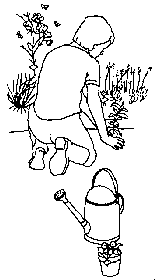
By choosing the right plants you can encourage wildlife to visit your backyard. For example, butterflies tend to be attracted to purple, blue, yellow, and pink flowers.
Wild animals become less or more numerous in response to changes in their environment. Keeping track of numbers of a particular bird or mammal in Canada and monitoring the state of health of each species is important. Because governments cannot afford to pay for all the research that is needed, volunteers and amateur naturalists have an important role to play. Some knowledge of wildlife is necessary for those who conduct the surveys, but there are also many essential tasks, such as typing, driving, record-keeping, and construction, that require little more than a keen interest.
Thousands of Canadians take part every year in the continent-wide Christmas Bird Count. During about 17 days from mid-December to early January, teams of birdwatchers find, count, and report as many birds as possible in their circle on that day. Feeder watchers monitor the birds at their feeders. Each Christmas Bird Count is organized locally, usually by a naturalist club. The information collected about species and numbers of birds is fed into a computer along with results from the United States and Mexican Christmas Bird Counts. Many people think it is necessary to be an expert birder to take part in the Christmas Bird Count. But even beginning birders can participate by joining a small group that includes an experienced birder. If you develop your birdwatching skills, including your ability to recognize bird songs and calls, to the expert level, you could be assigned a route in the spring Breeding Bird Survey (BBS) or take part in the Canadian Wildlife Service’s Forest Bird Monitoring Program. Biologists and conservationists use the results of the BBS to determine population trends of birds throughout North America. The purpose of the newer Forest Bird Monitoring Program is to determine population trends of woodland birds and recommend ways to manage forest lands to benefit birds.
You can also make a contribution to bird surveys by simply keeping track of the birds that visit your feeder. Project Feeder Watch, organized by Bird Studies Canada (BSC), asks volunteers to count species and individuals for two consecutive days every two weeks, fill the information in on a form, and send it to BSC at the end of winter.
In recent years, many new wildlife surveys that invite public participation have sprung up. They include Frogwatch and Wormwatch in which Environment Canada’s EMAN (Environmental Monitoring and Assessment Network) participates along with the Canadian Wildlife Federation’s coast-to-coast Butterfly Survey, BSC’s Canadian Lakes Loon Survey and Owl Monitoring, and Plantwatch, coordinated by the Devonian Botanic Garden of the University of Alberta. There are several lists of wildlife surveys on the Web. The Canadian Wildlife Federation list is available on the Internet.
Helping wildlife at risk
Canada’s special-concern, threatened, and endangered species are particularly in need of our help. Government programs have brought some of these species, notably the Whooping Crane, White Pelican, and wood bison, back from the brink. But there are also local organizations helping endangered wildlife, such as the Piping Plover guardianship programs in the Atlantic and Prairie provinces. After a training session on the basics of Piping Plover biology, community members go to beaches to guard the nesting areas of this endangered species, inform the public about the bird, ask users of the beaches to avoid nests, and record the species’ distribution and reproductive success.
Habitat protection also helps at-risk wildlife. The Karner blue butterfly of southwestern Ontario lives on lupine and butterfly weed, but the species has become endangered as its host plants are disappearing in this highly populated and intensively cultivated part of Ontario. Lambton Wildlife Inc., a Sarnia naturalist club, bought suitable land and created the Karner Blue Sanctuary. The club is re-establishing the required plant species, and hopes to reintroduce larvae of the butterfly.
If you identify an endangered species outside its known range, report your sighting to local wildlife authorities. All sightings of the endangered Whooping Crane should be reported by phone to 1-800-668-6767.
To learn more about species at risk and what recovery teams are doing to help them, visit the Species at Risk Registry.
Even if you don’t want to join a group, you can still support a conservation group that you feel is doing a good job of protecting wildlife. A letter to the organization, a letter to a newspaper, or a financial donation can encourage others to continue to work on behalf of wildlife.
Resources
The Nature Conservancy of Canada
In addition to the national organizations listed above, your provincial or territorial wildlife agency and the CWS office in your area can provide other information. For example, the Ontario Ministry of Natural Resources sells an 18-page booklet called Landscaping for wildlife. Call (416) 314-2000 for information.
© Her Majesty the Queen in Right of Canada, represented by the Minister of the Environment, 1994, 2001. All rights reserved.
Catalogue number CW69-4/91-2001E
ISBN 0-662-29709-1
Text: Lorraine Brown
Revision: Susan Burns, 2000
Reprinted with corrections, 2002



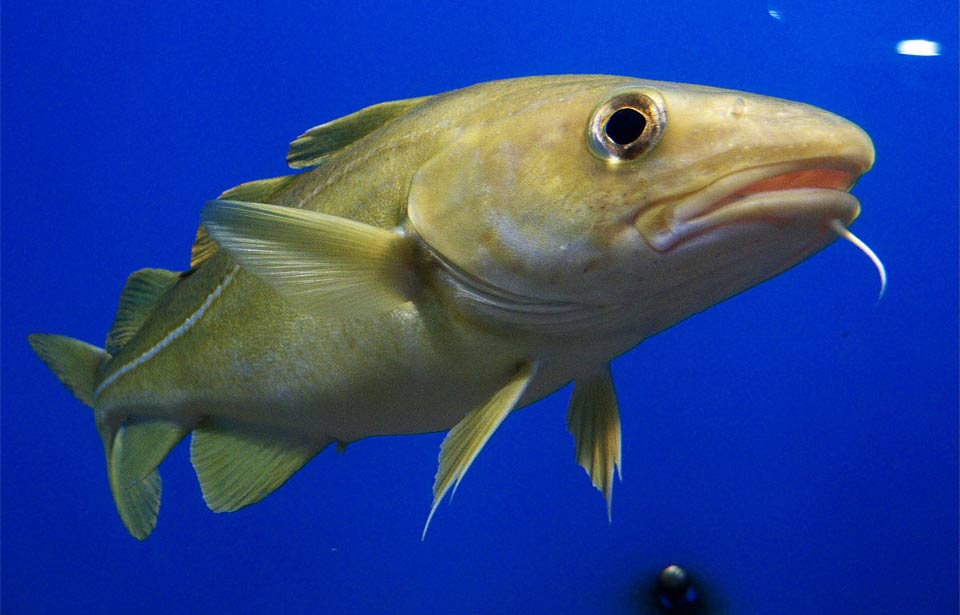
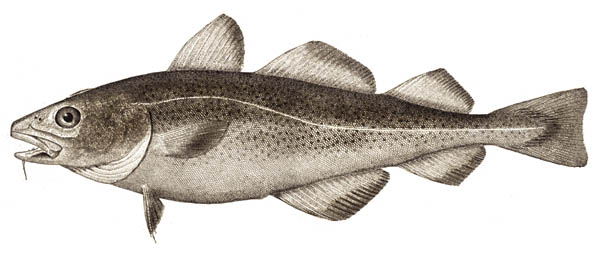 The Atlantic Cod (Gadus morhua) is a medium to large saltwater fish: generally averaging two to three kilograms in weight and about 65 to 100 centimetres in length, the largest cod on record weighed about 100 kg and was more than 180 cm long! Individuals living closer to shore tend to be smaller than their offshore relatives, but male and female cod are not different in size, wherever they live.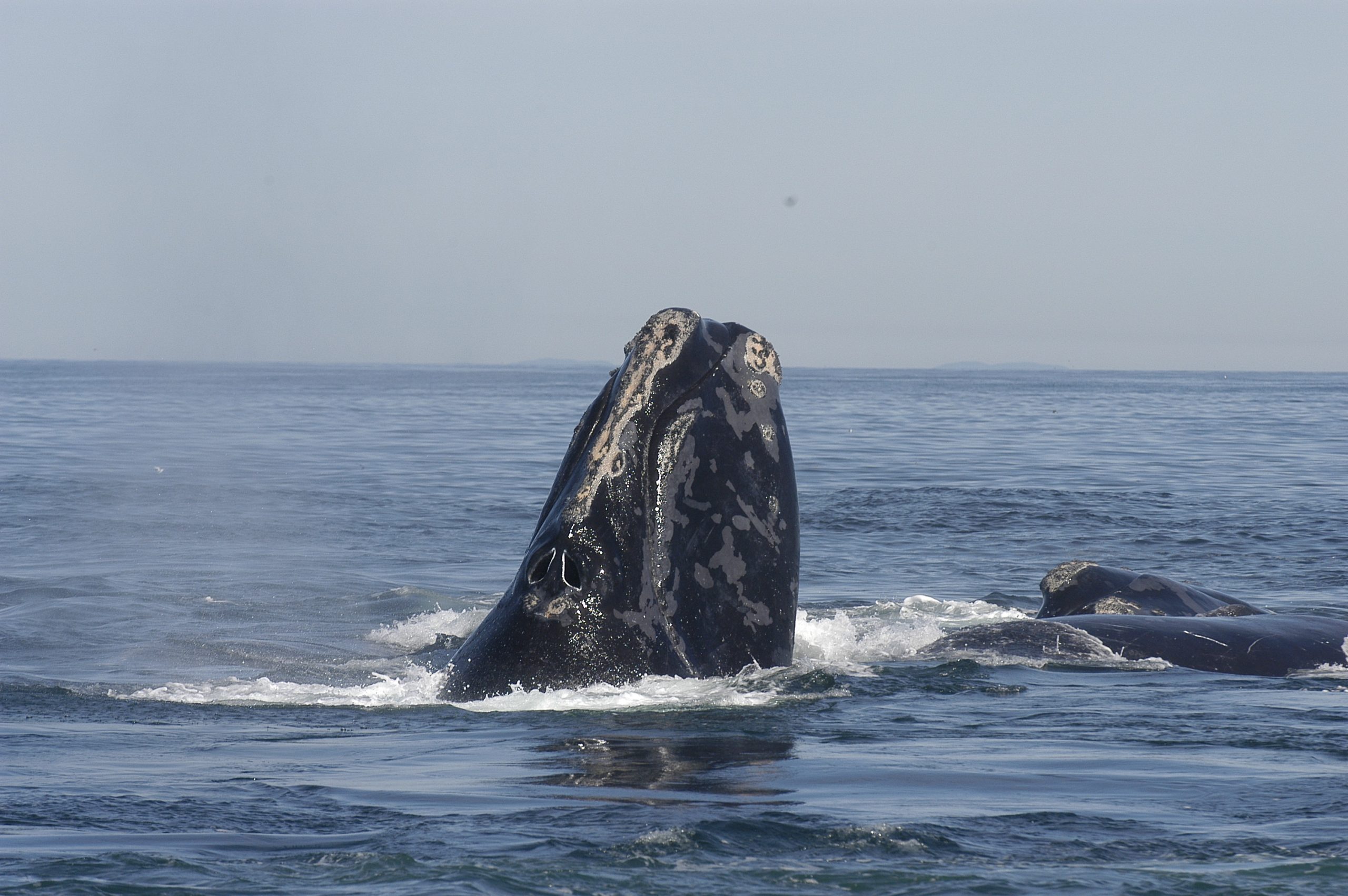
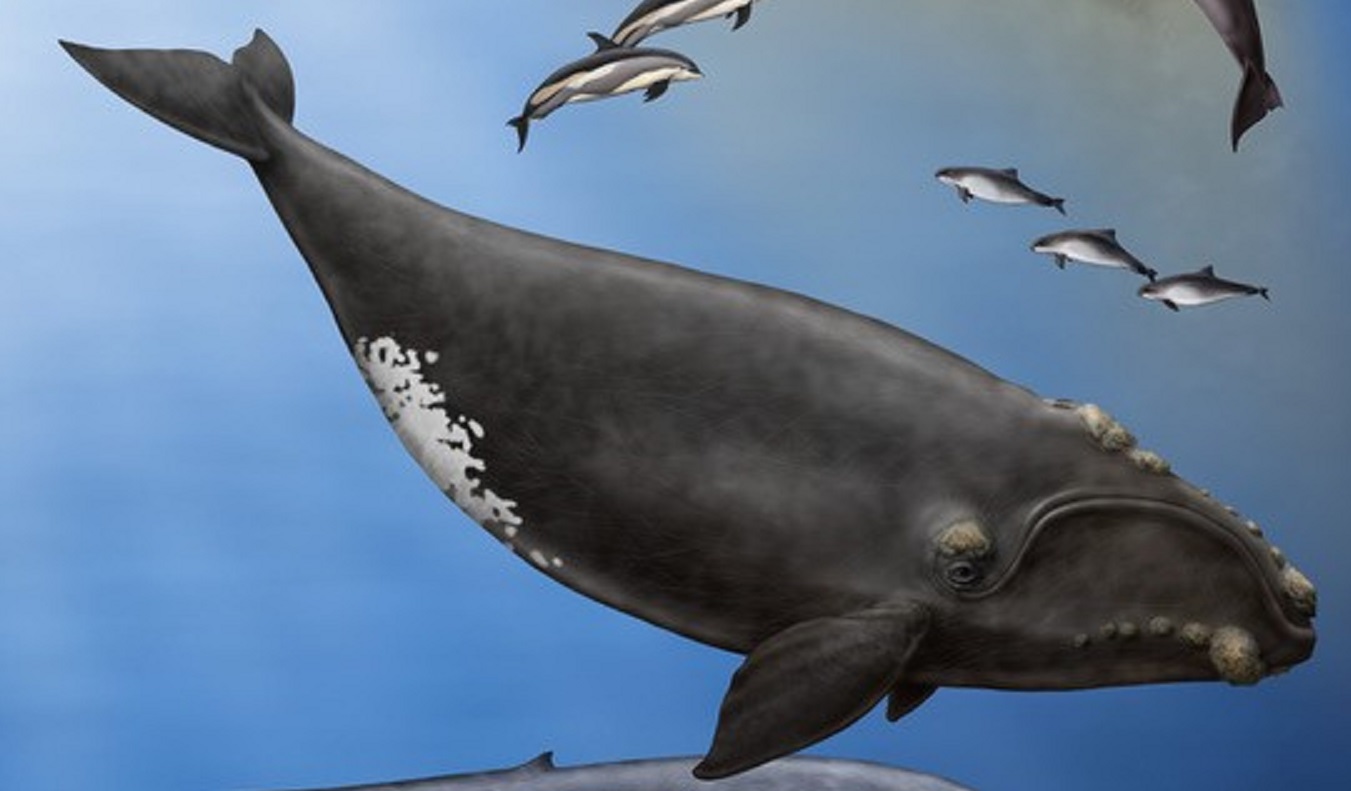 The North Atlantic Right Whale (Eubalæna glacialis) is one of the rarest of the large whales. It can weigh up to 63,500 kilograms and measure up to 16 metres. That’s the length of a transport truck and twice the weight! Females tend to be a bit larger than males – measuring, on average, one metre longer. Considering its weight, it’s fairly short, giving it a stocky, rotund appearance. Its head makes up about a fourth of its body length, and its mouth is characterized by its arched, or highly curved, jaw. The Right Whale’s head is partially covered in what is called callosities (black or grey raised patches of roughened skin) on its upper and lower jaws, and around its eyes and blowhole. These callosities can appear white or cream as small cyamid crustaceans, called “whale lice”, attach themselves to them. Its skin is otherwise smooth and black, but some individuals have white patches on their bellies and chin. Under the whale’s skin, a blubber layer of sometimes more than 30 centimetres thick helps it to stay warm in the cold water and store energy. It has large, triangular flippers, or pectoral fins. Its tail, also called flukes or caudal fins, is broad (six m wide from tip to tip!), smooth and black. That’s almost the same size as the Blue Whale’s tail, even though Right Whales are just over half their size. Unlike most other large whales, it has no dorsal fin.
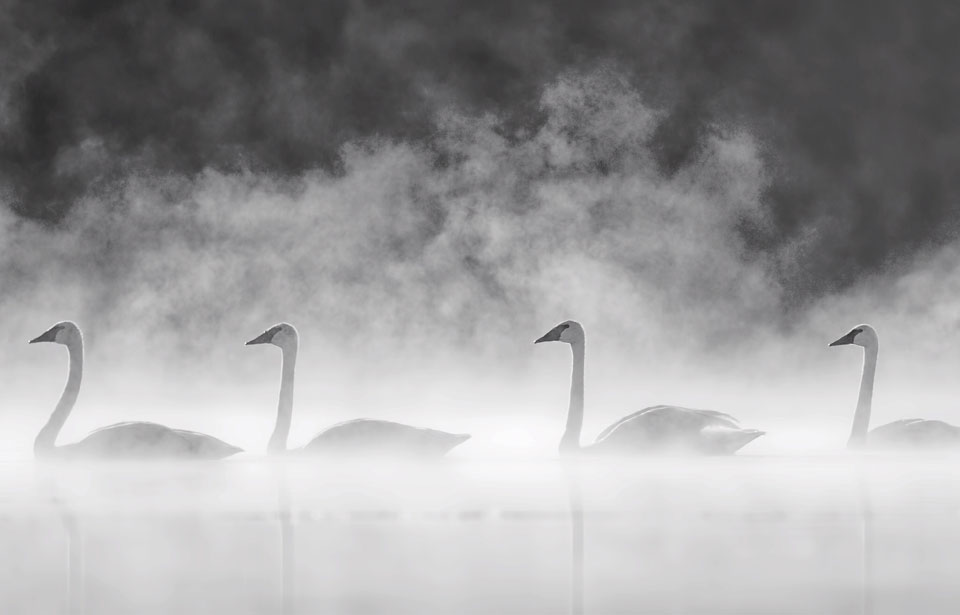
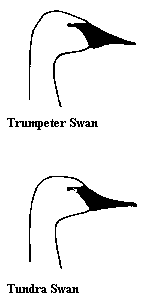 Adult Trumpeter Swans Cygnus buccinator are large birds with white feathers and black legs and feet. The feathers of the head and the upper part of the neck often become stained orange as a result of feeding in areas rich in iron salts. The lack of colour anywhere on the swans’ bodies distinguishes them from other white species of waterfowl, such as snow geese, which have black wing tips.