



 Saw-whet Owl
 Description
 Credit: Bill Maynard
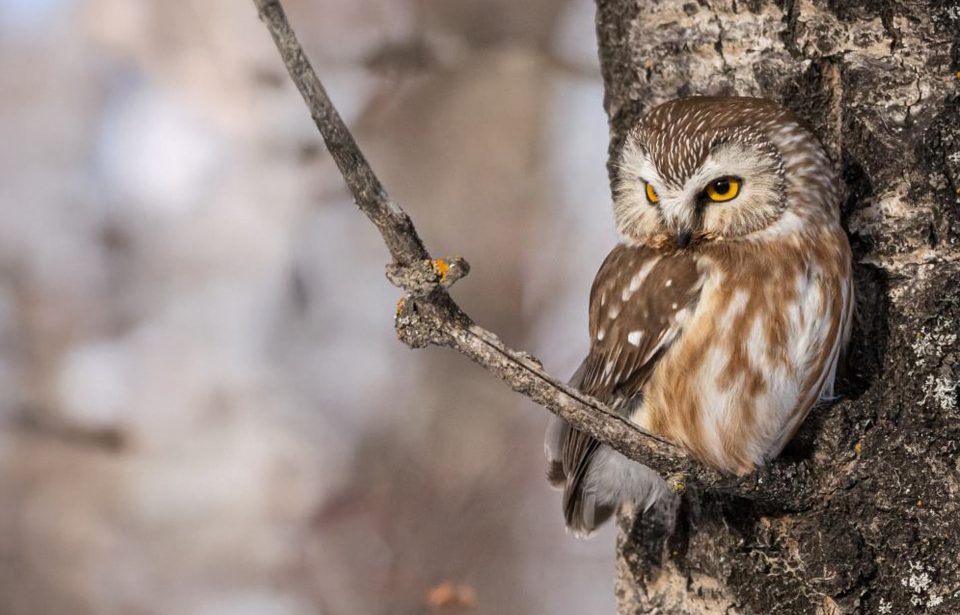
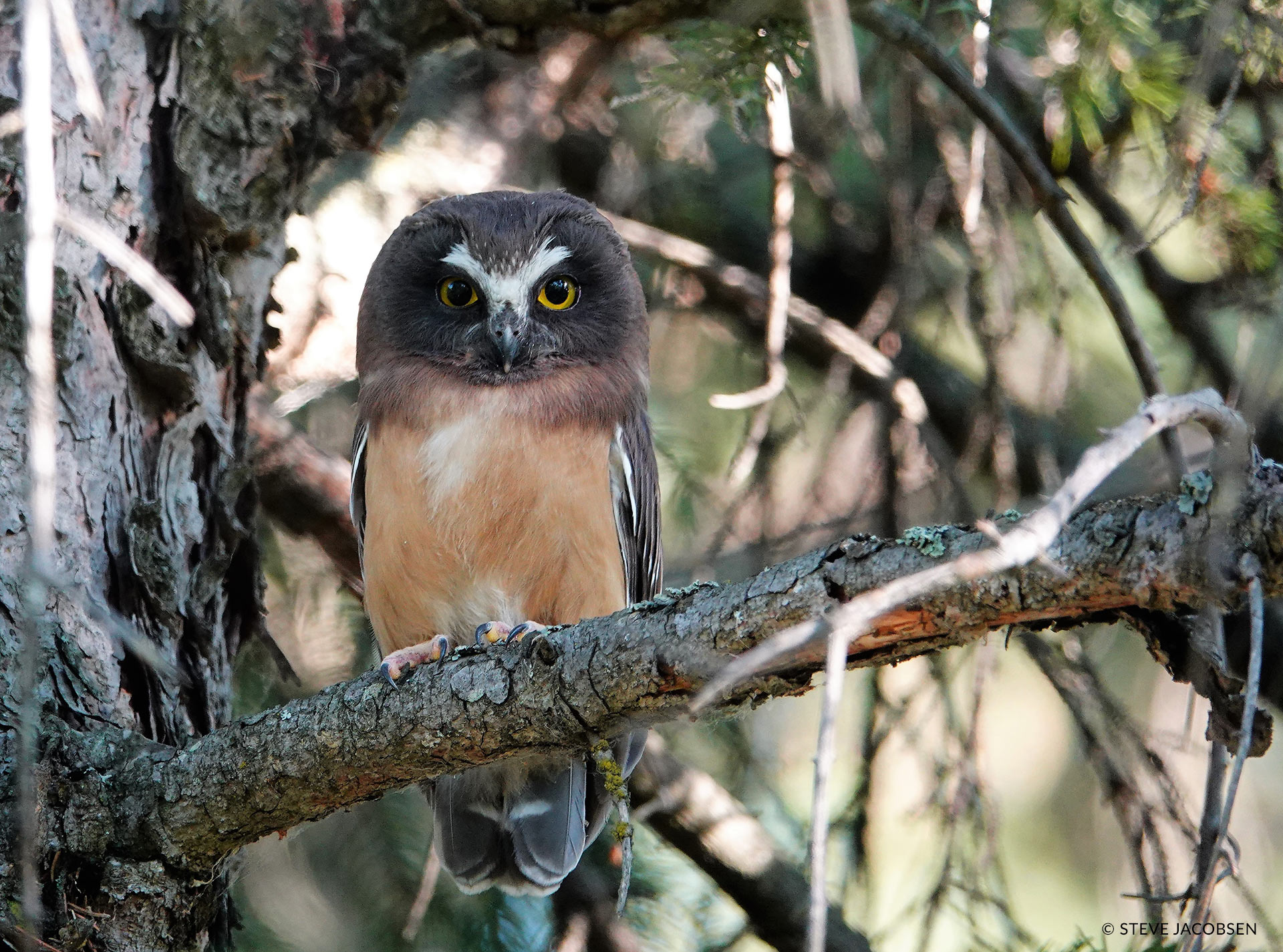
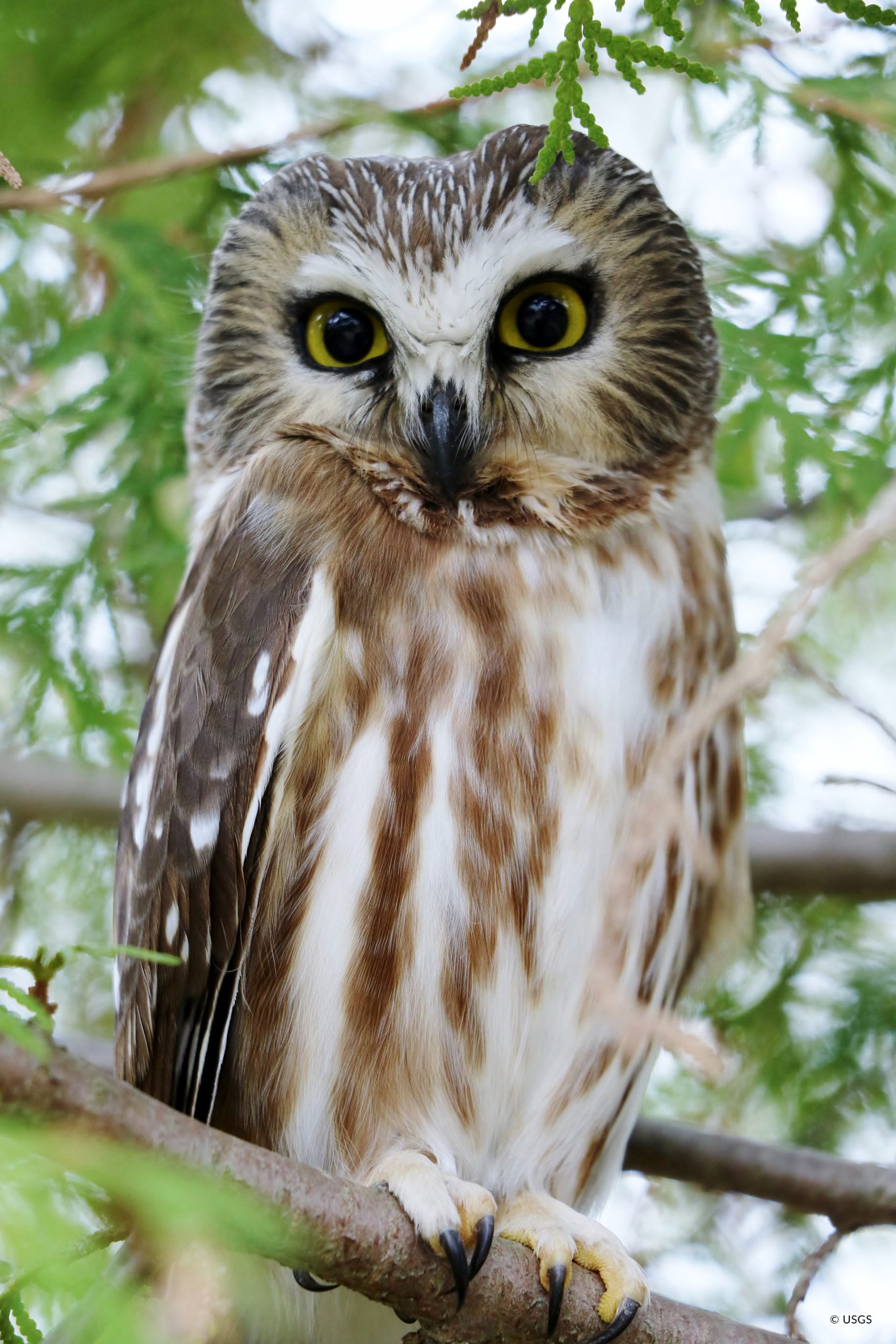
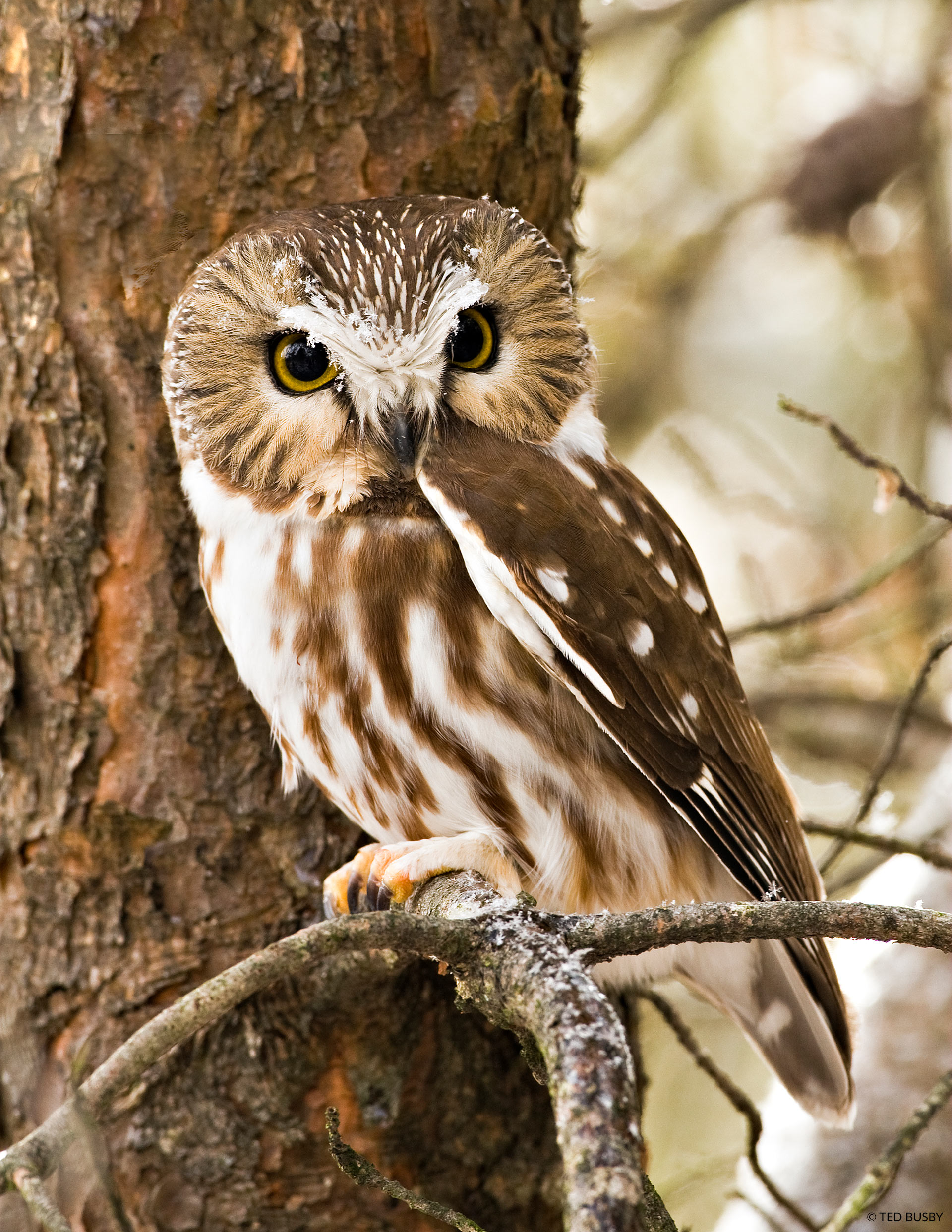
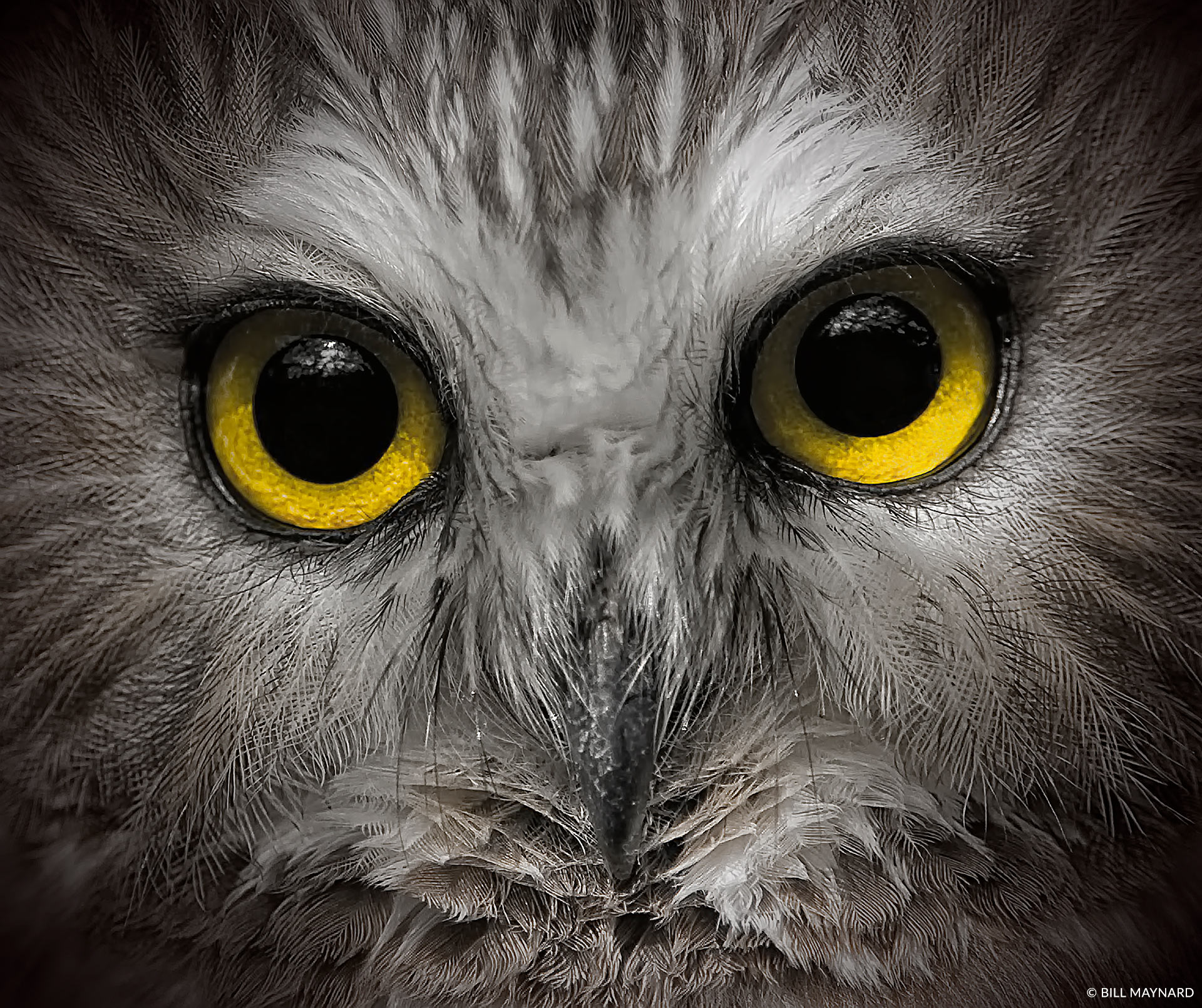
The Northern Saw-whet Owl (Aegolius acadicus) is one of Canada’s smallest owls, measuring 18 to 22 centimetres in length with a wingspan of 42 to 56 centimetres. Adults typically weigh between 65 and 110 grams, making them smaller than a robin and among the lightest birds of prey in North America. Despite their small size, Northern Saw-whet Owls possess many physical adaptations that make them highly effective nocturnal hunters.
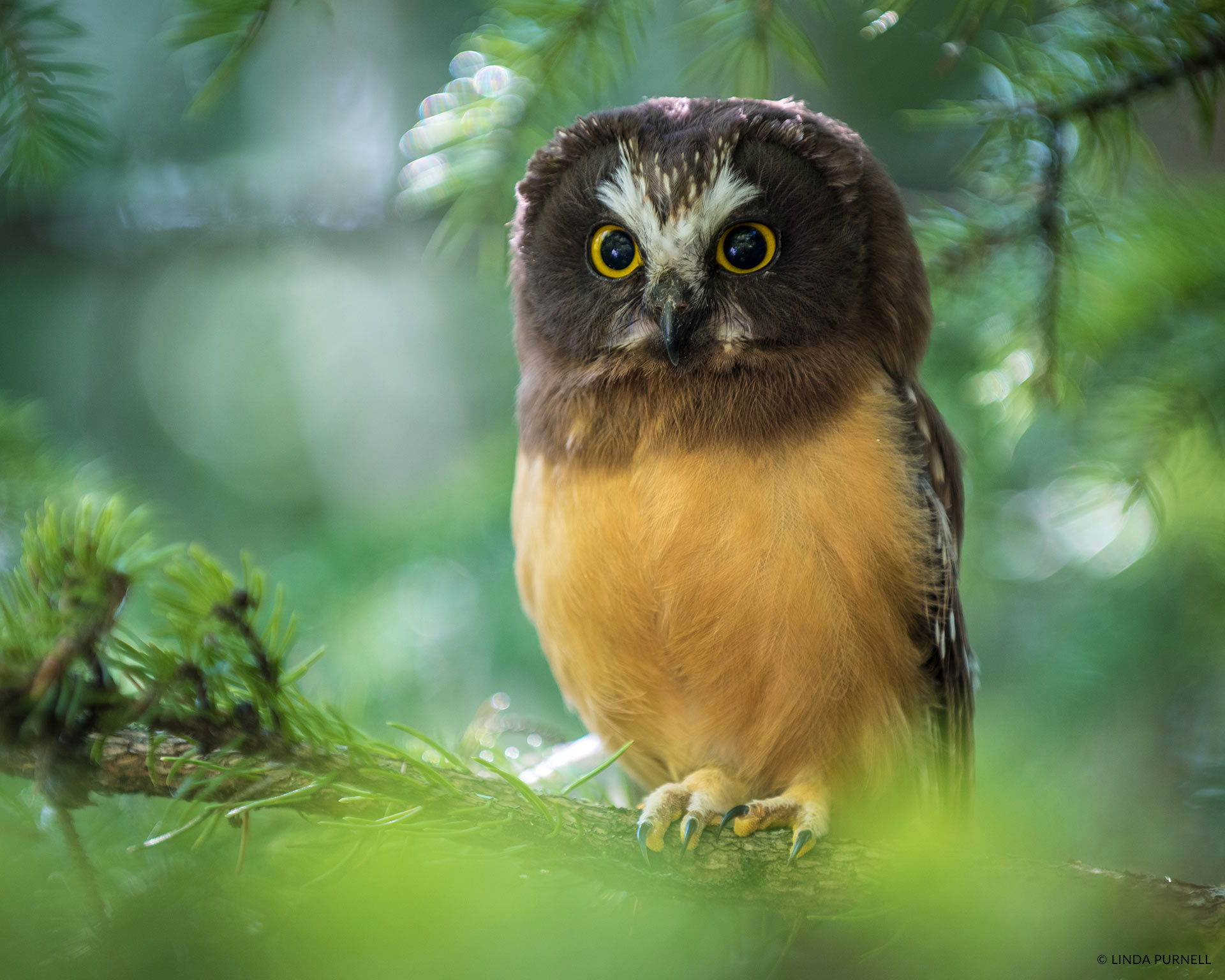
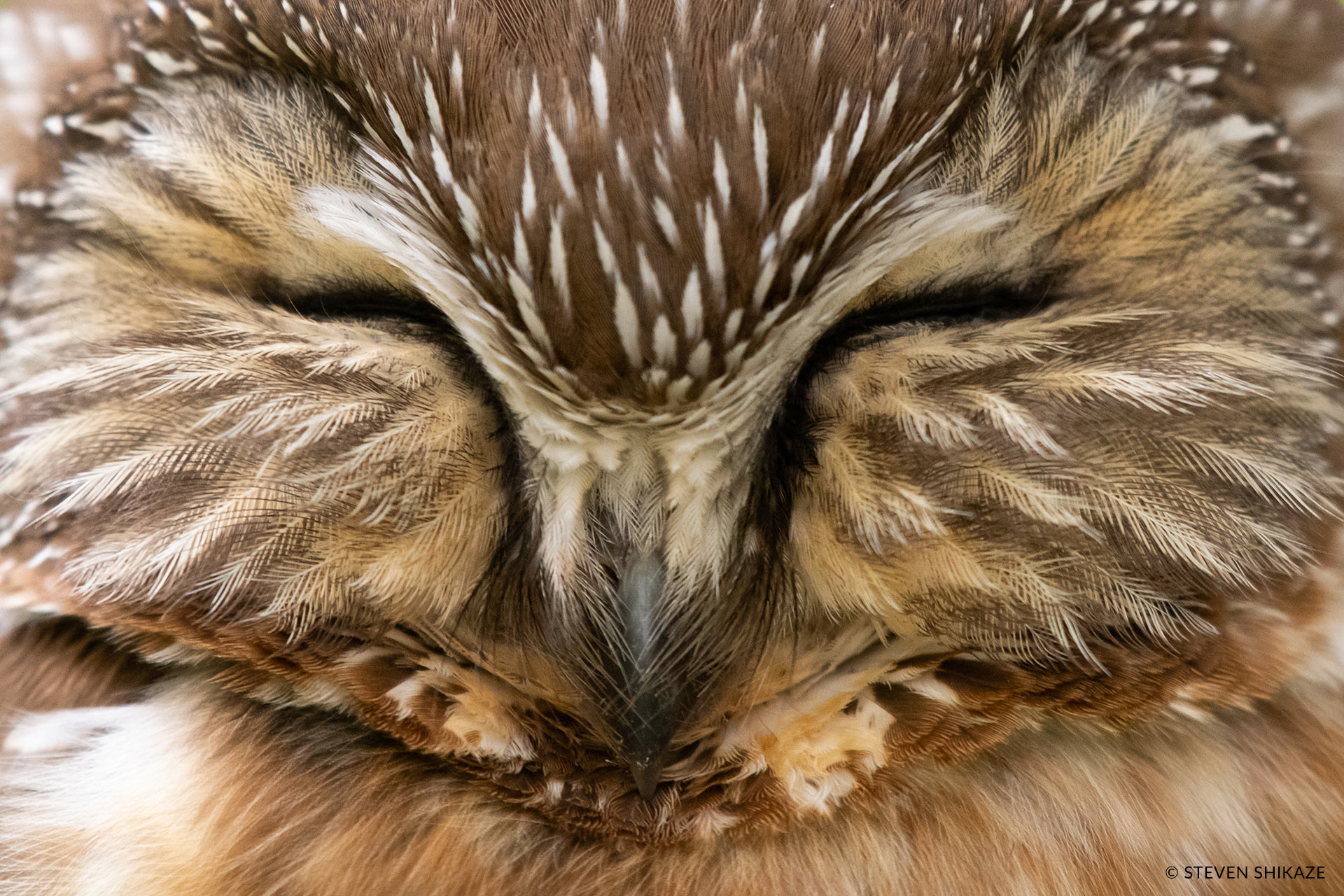
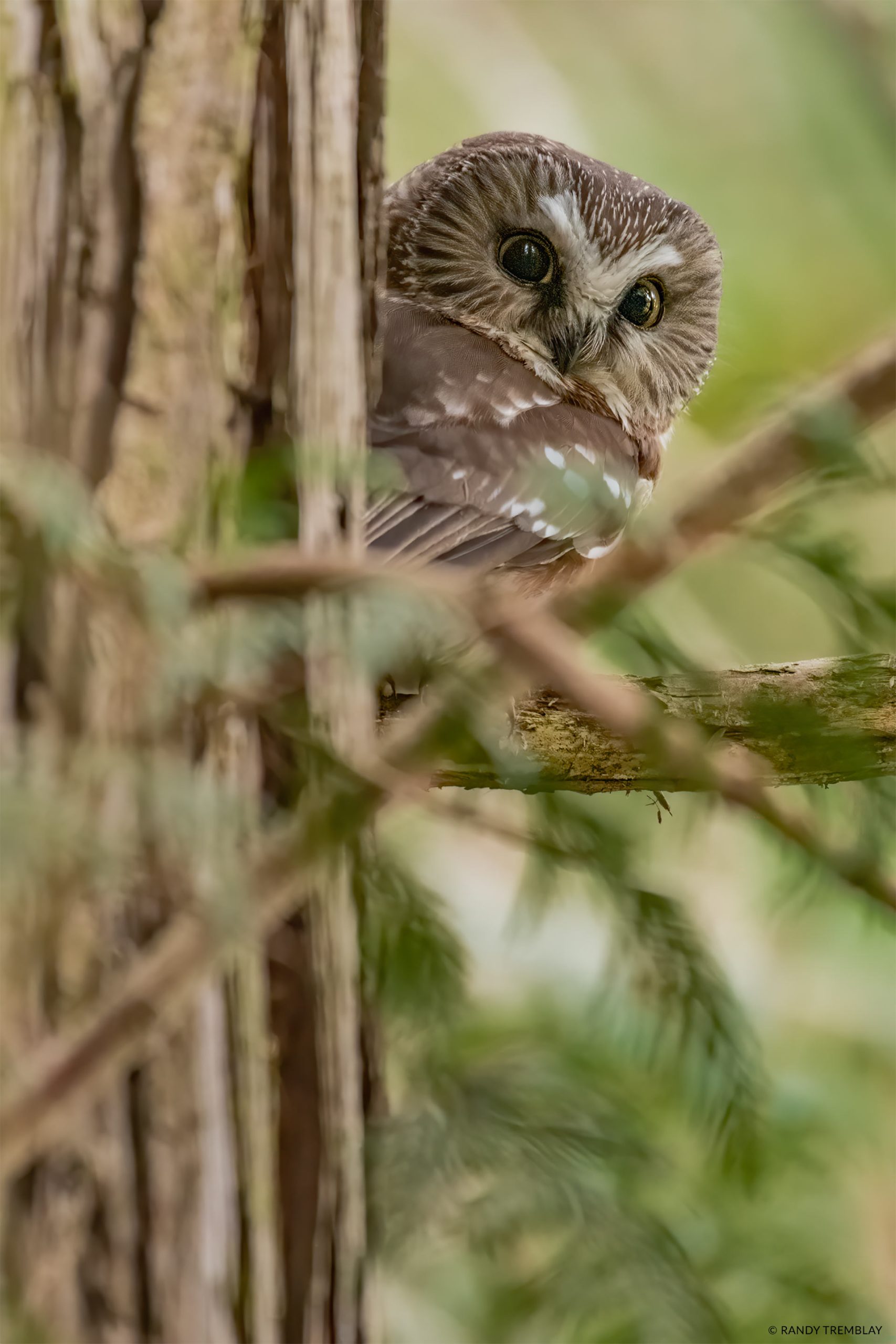
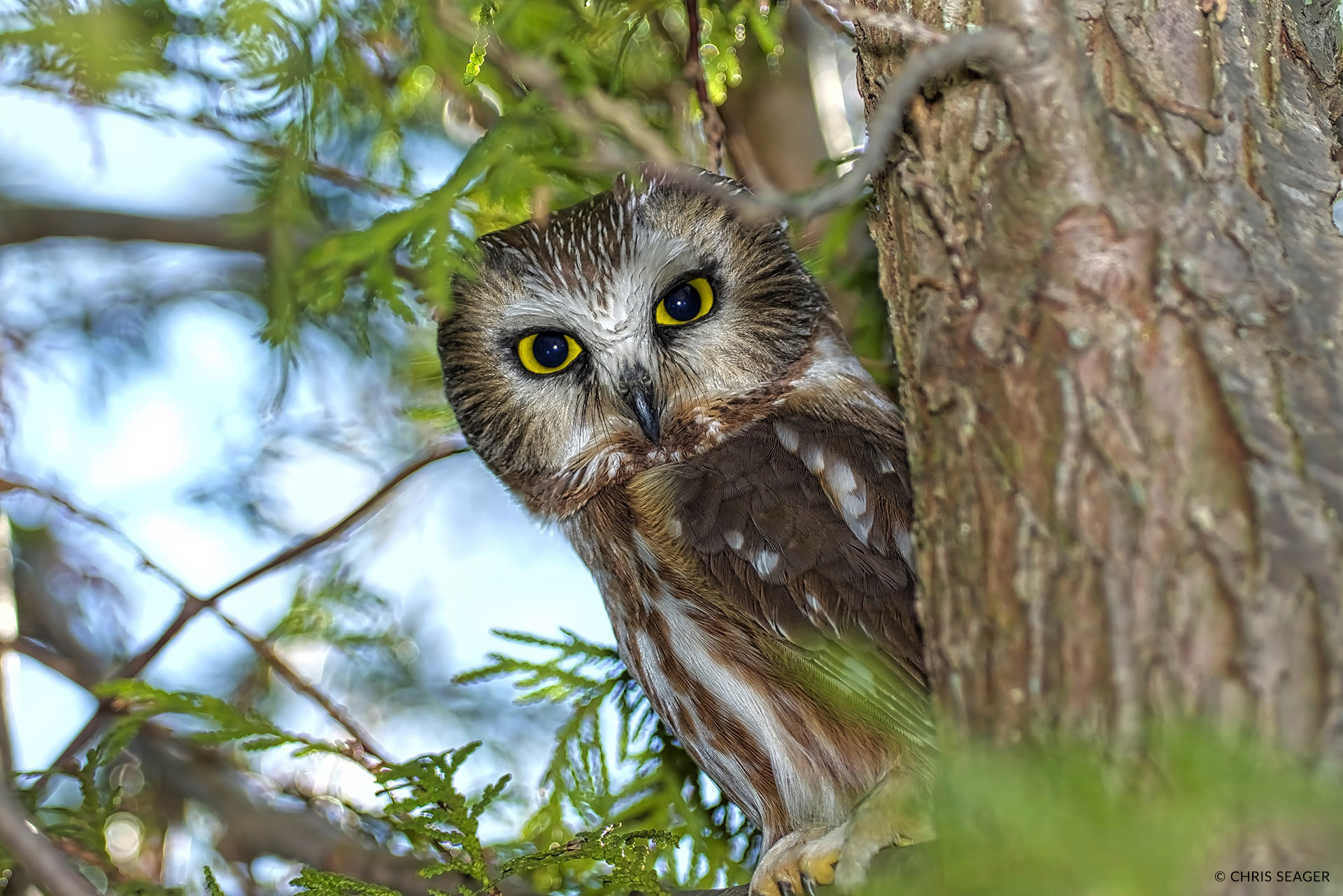
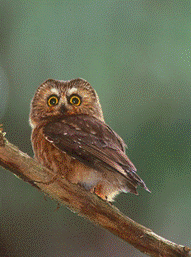
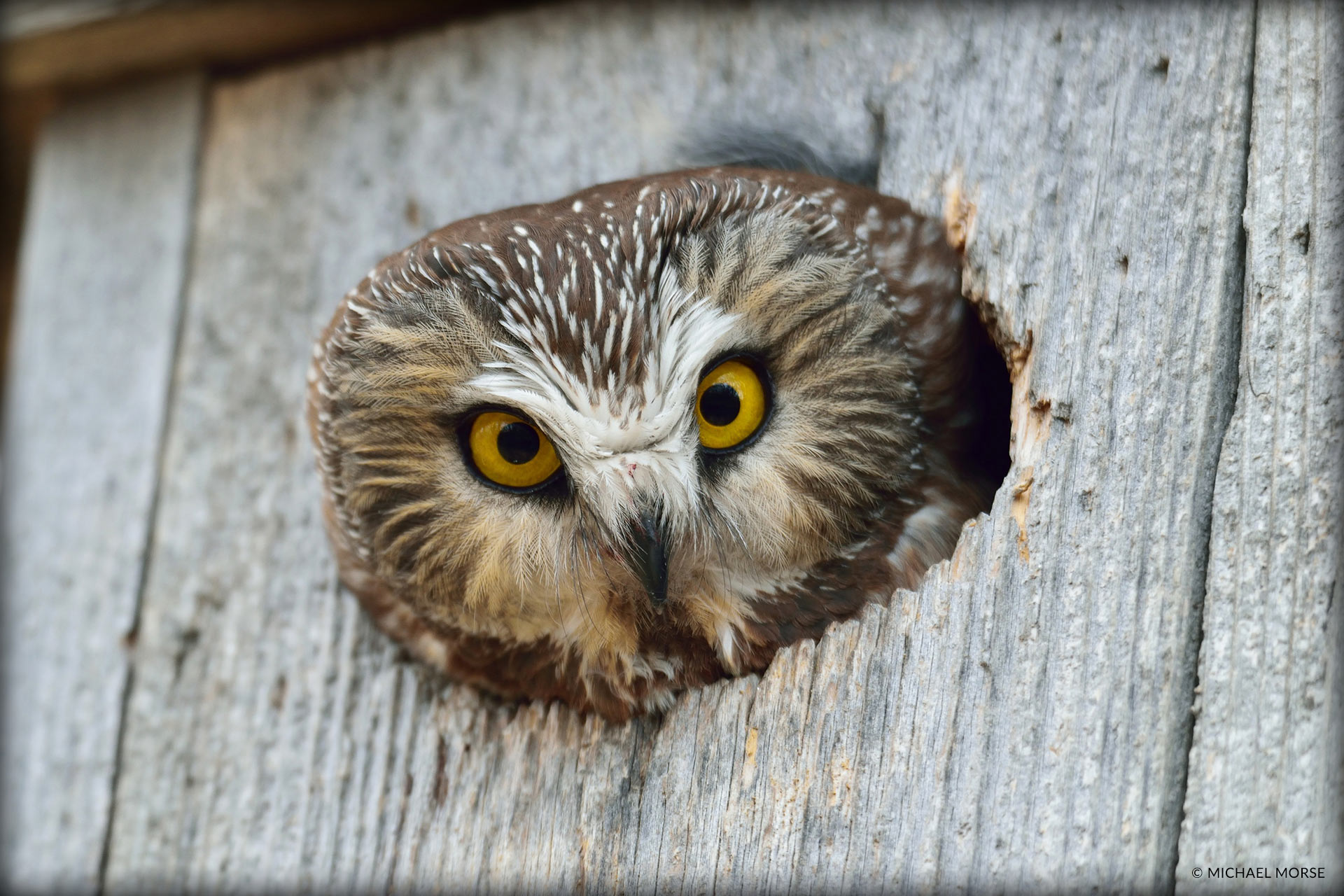
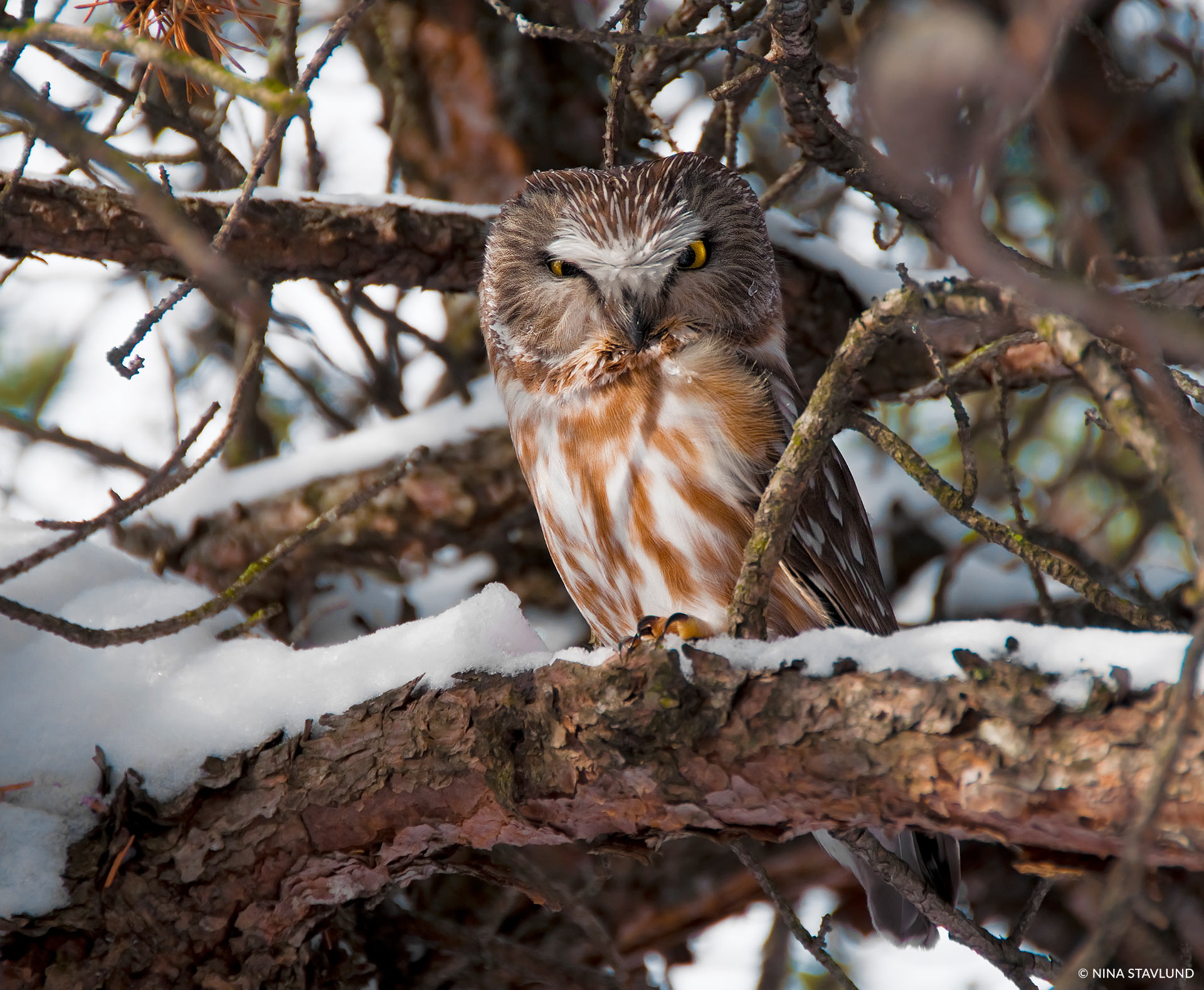
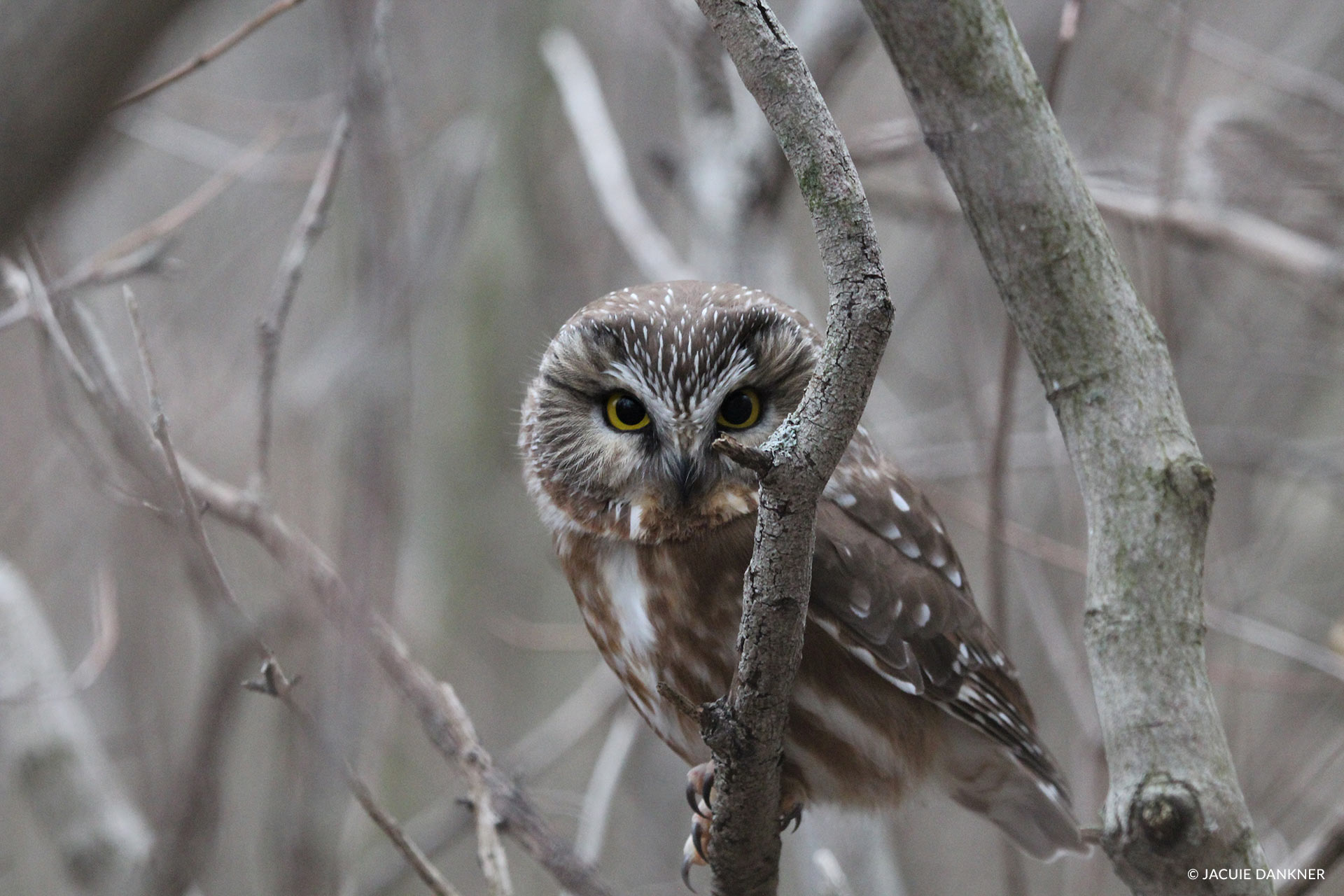
Their plumage is predominantly warm brown, marked with white spotting across the back and wings. The underparts are pale with fine brown streaking, a pattern that provides excellent camouflage against tree bark and forest shadows. The rounded head lacks ear tufts, giving the owl a compact appearance, and is dominated by large, bright yellow eyes. These eyes are forward-facing, providing strong binocular vision that helps the owl judge distance accurately when striking prey.
The pale facial disk surrounding their eyes and bill plays a crucial role in directing sound toward the owl’s ears. Combined with asymmetrically placed ear openings, this structure allows the Northern Saw-whet Owl to pinpoint the location of prey with remarkable precision, even in complete darkness or beneath light snow cover.
 Credit: Chris Seager
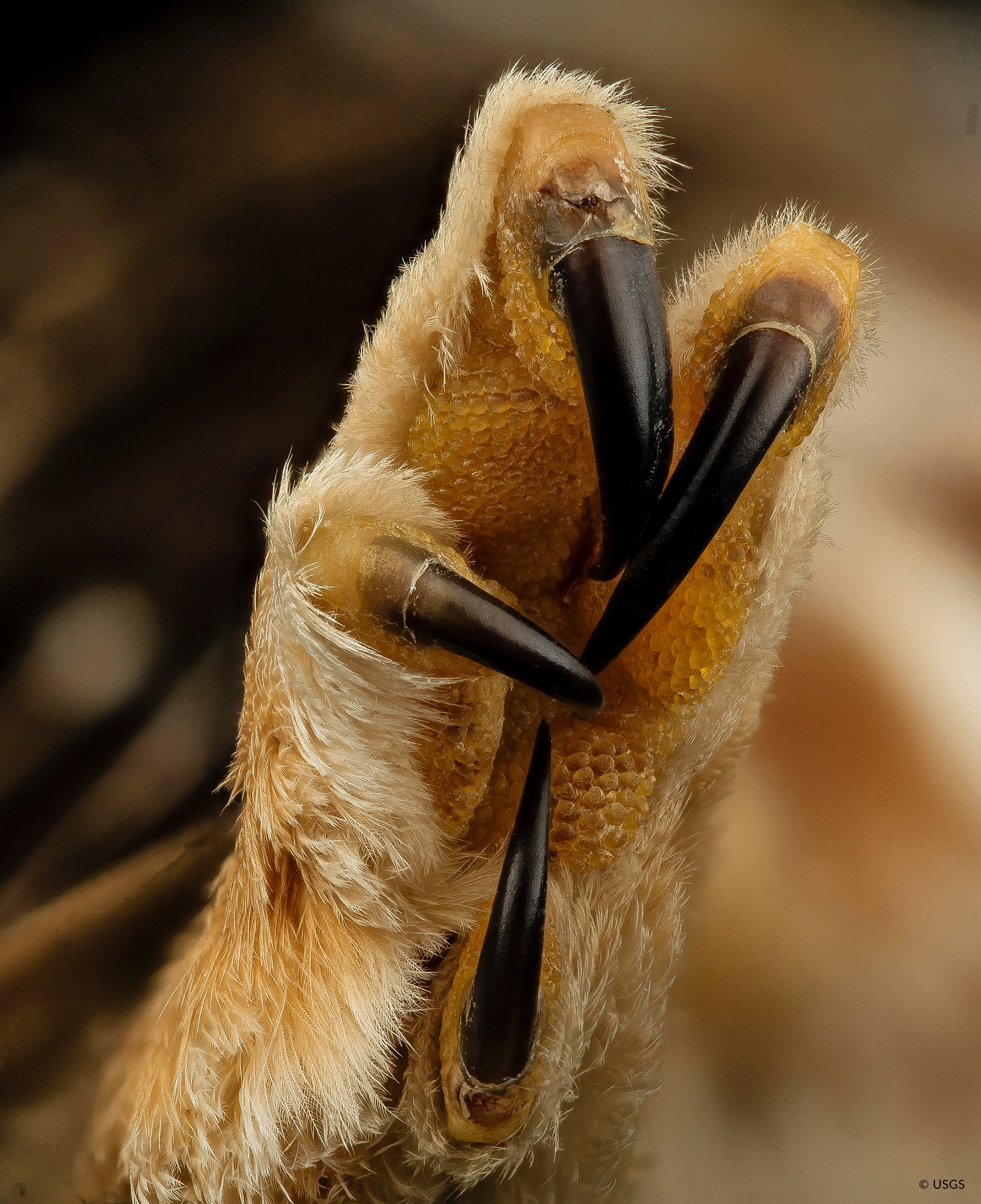
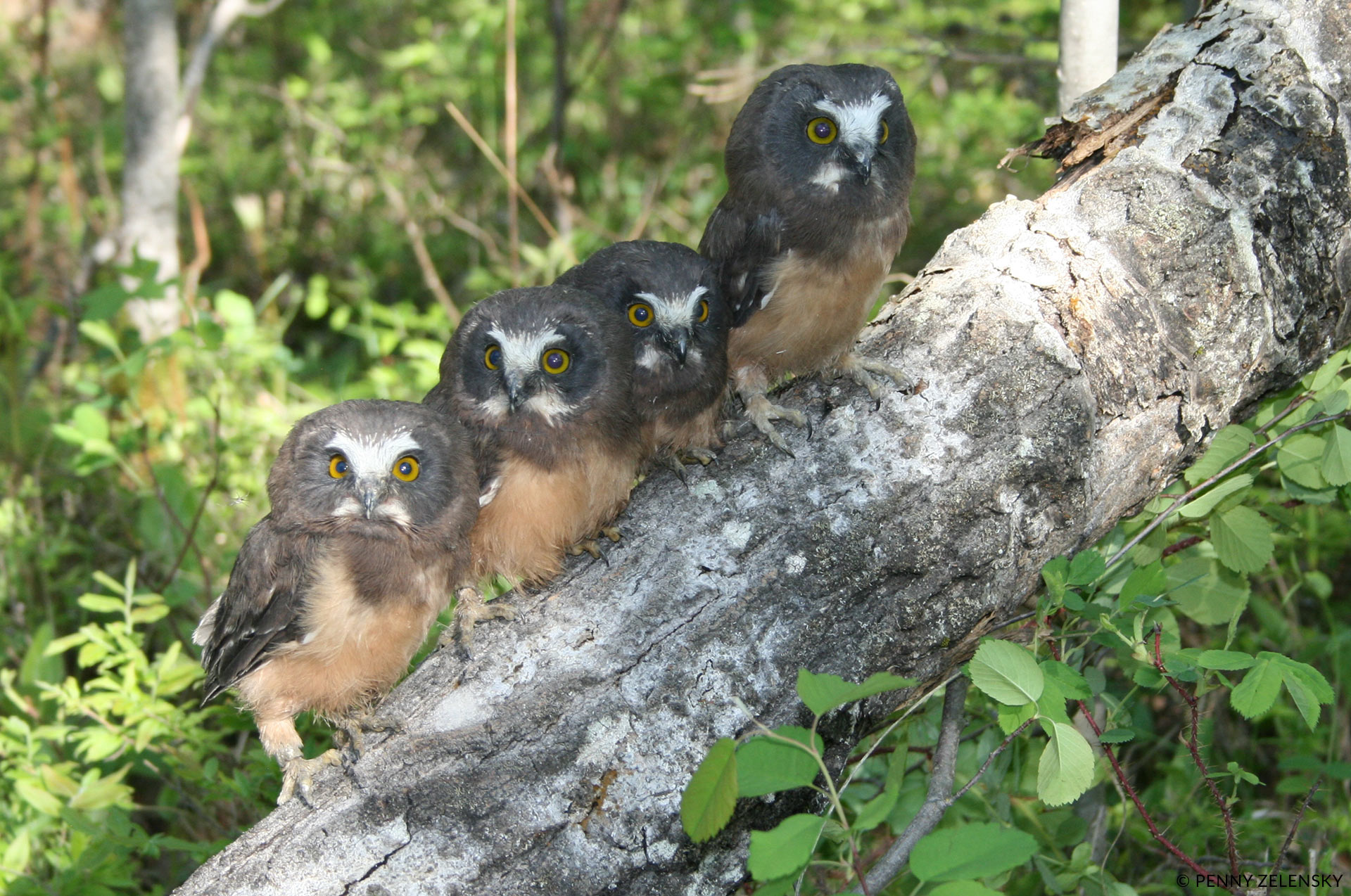
Like other owls, the Northern Saw-whet Owl has a short, sharply hooked bill designed for tearing flesh and powerful, curved talons used to seize and kill prey. Its flight feathers have soft, fringed edges that reduce noise during flight, enabling the owl to approach prey silently. Males and female Northern Saw-whet Owls appear similar in colouration, though females are slightly larger – a trait common among birds of prey. Juveniles resemble adults but often display more subdued plumage and less distinct markings during their first months of life.
In addition to its physical features, the Northern Saw-whet Owl is known for its distinctive vocalizations. Its name comes from one of its distinctive calls, which can be compared to the sound of a whetstone sharpening a blade.
Habitat and Habits
 Credit: Liam Ragan
Northern Saw-whet Owls inhabit a wide range of forested environments across Canada, including coniferous, mixed and deciduous forests. They are most strongly associated with mature forest stands that provide dense vegetation for concealment and an abundance of natural cavities suitable for nesting and roosting. Forests with complex structure – including a mix of live trees, standing dead wood and fallen logs – offer the conditions these owls require to hunt effectively and remain hidden from predators.
In Canada, Northern Saw-whet Owls are commonly found in forests dominated by spruce, fir, pine, aspen and mixed-wood species, from coastal regions to the interior boreal forest. They occur in both lowland and upland forests and can be found in forested parklands, riparian woodlands and wooded areas near wetlands. While they are most abundant in undisturbed forests, they can also persist in partially managed landscapes if suitable cover and cavity-bearing trees are retained.
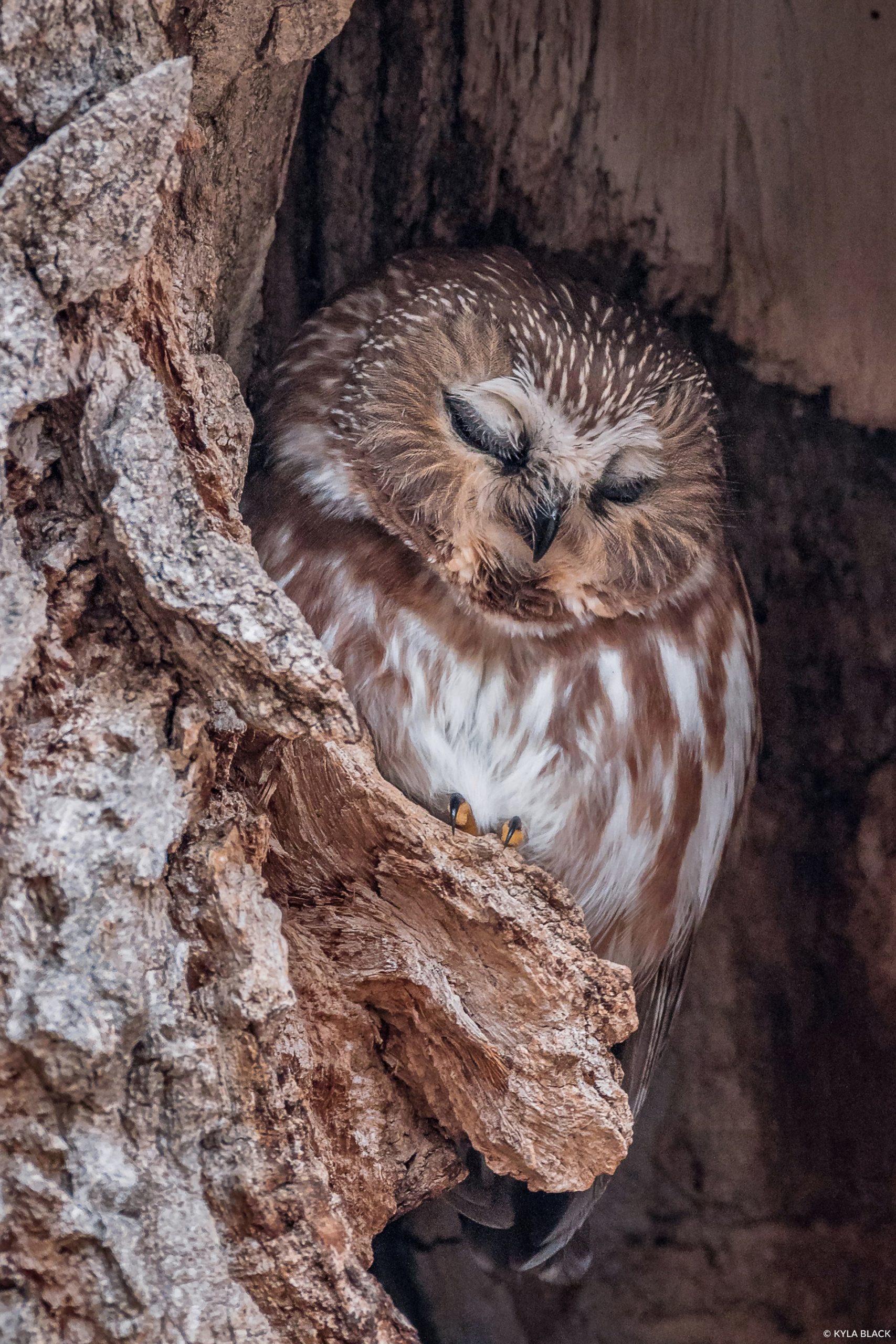
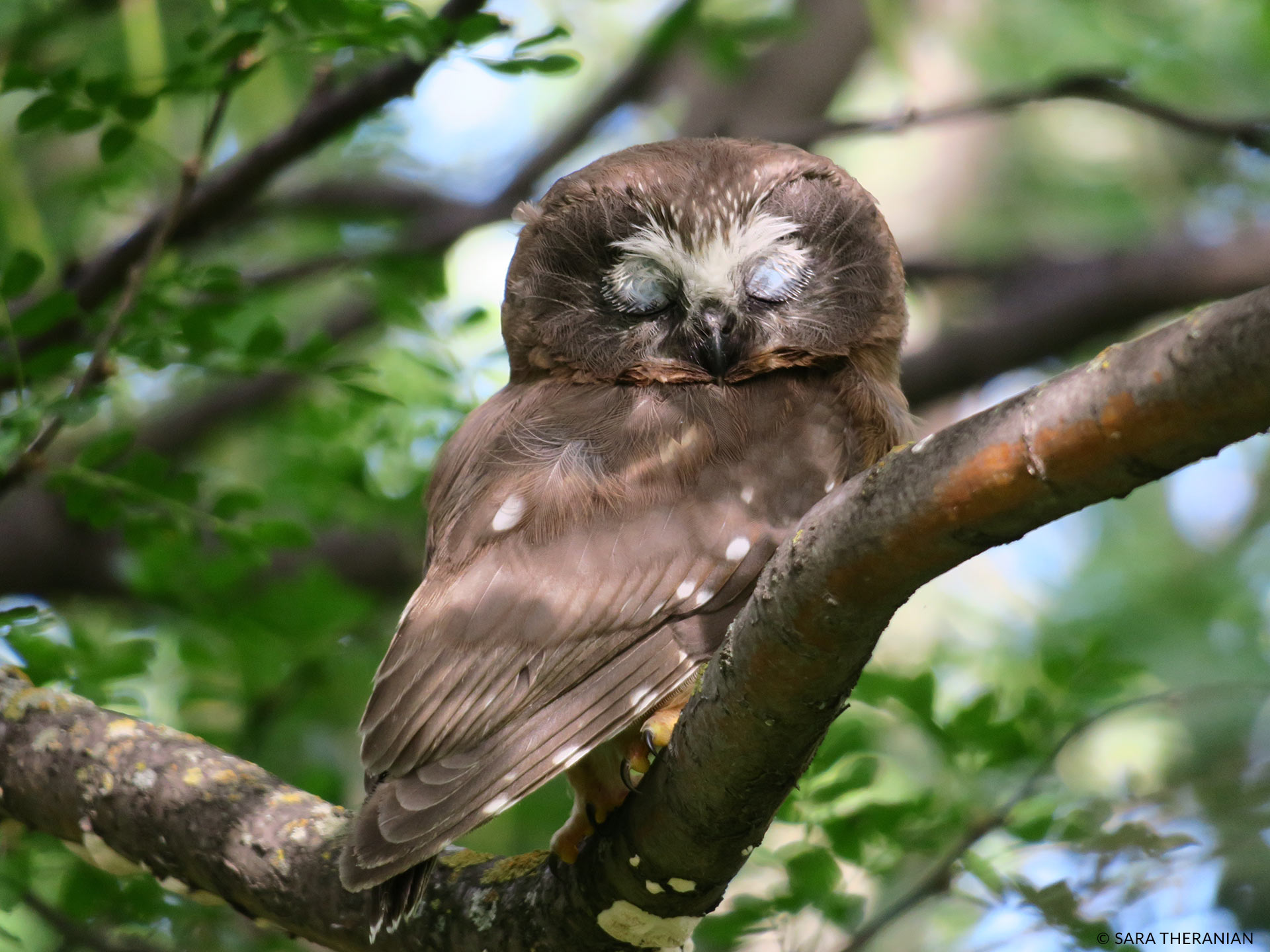
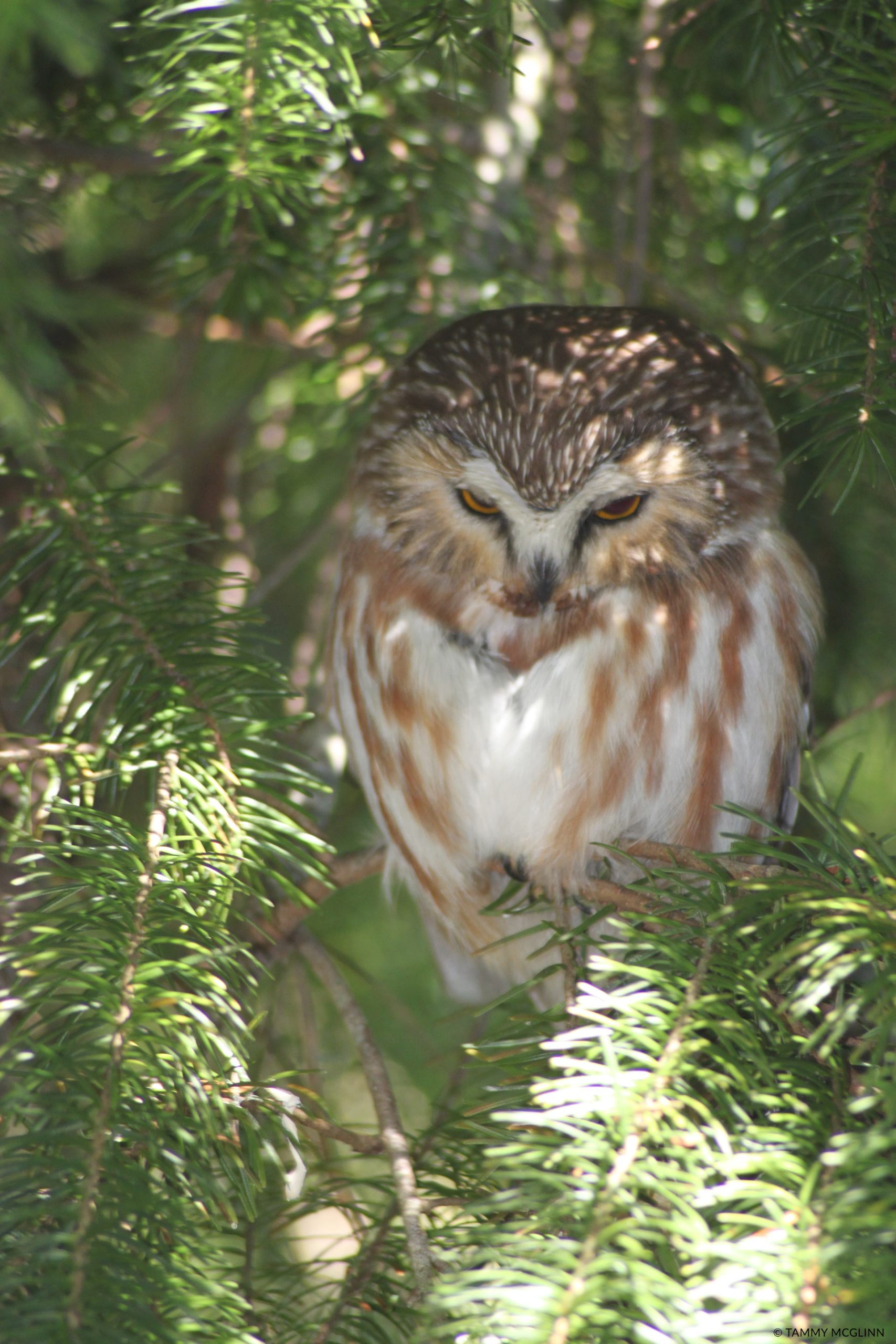
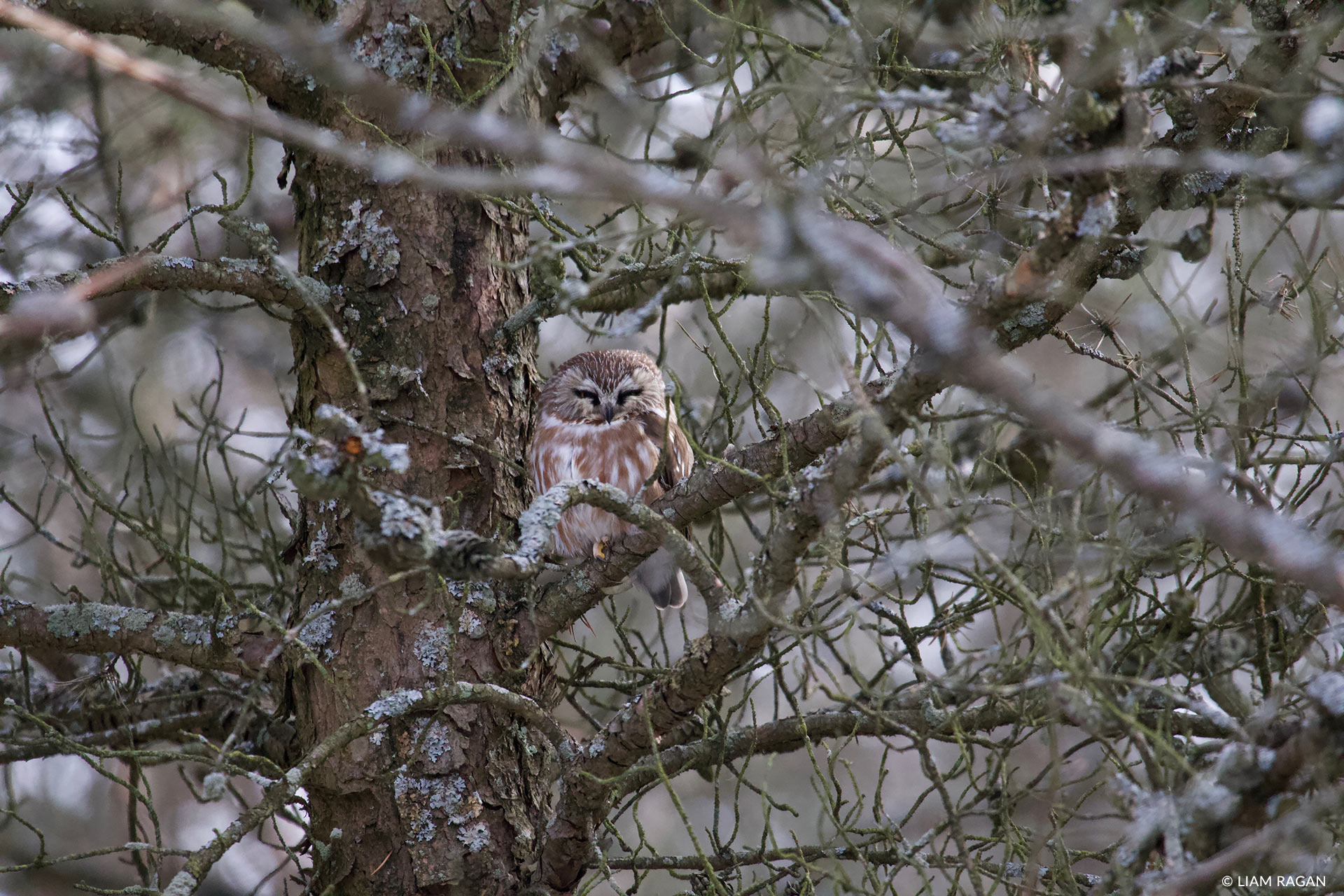
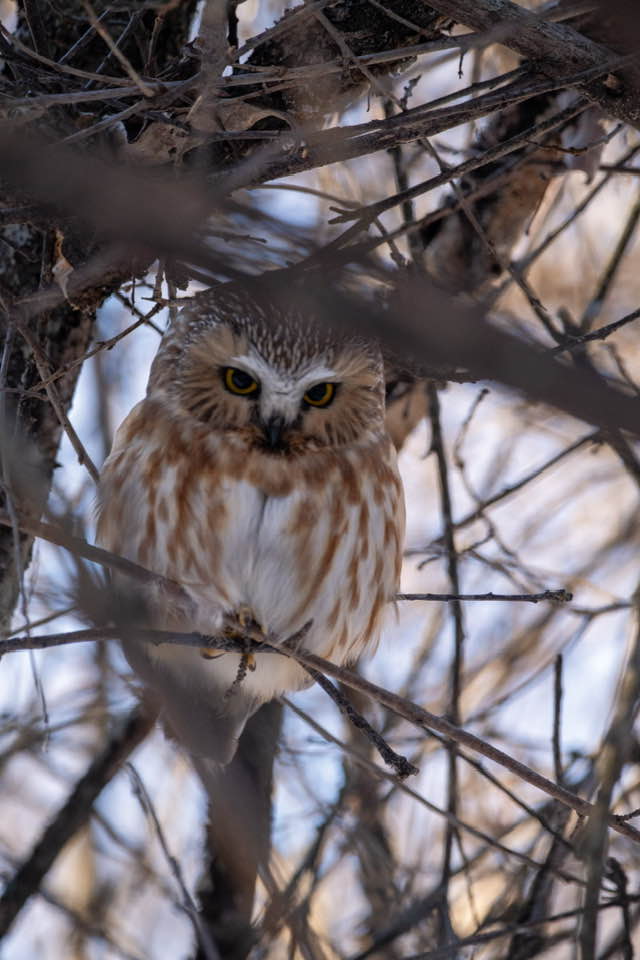
During daylight hours, Northern Saw-whet Owls roost quietly in dense vegetation, often selecting locations close to tree trunks, among thick branches or within evergreen foliage. Their mottled plumage blends seamlessly with bark and shadows, making them extremely difficult to detect – even at close range. When approached, they often remain motionless, relying on camouflage rather than flight to avoid detection.
 Credit: Karim Bouzidi Idrissi
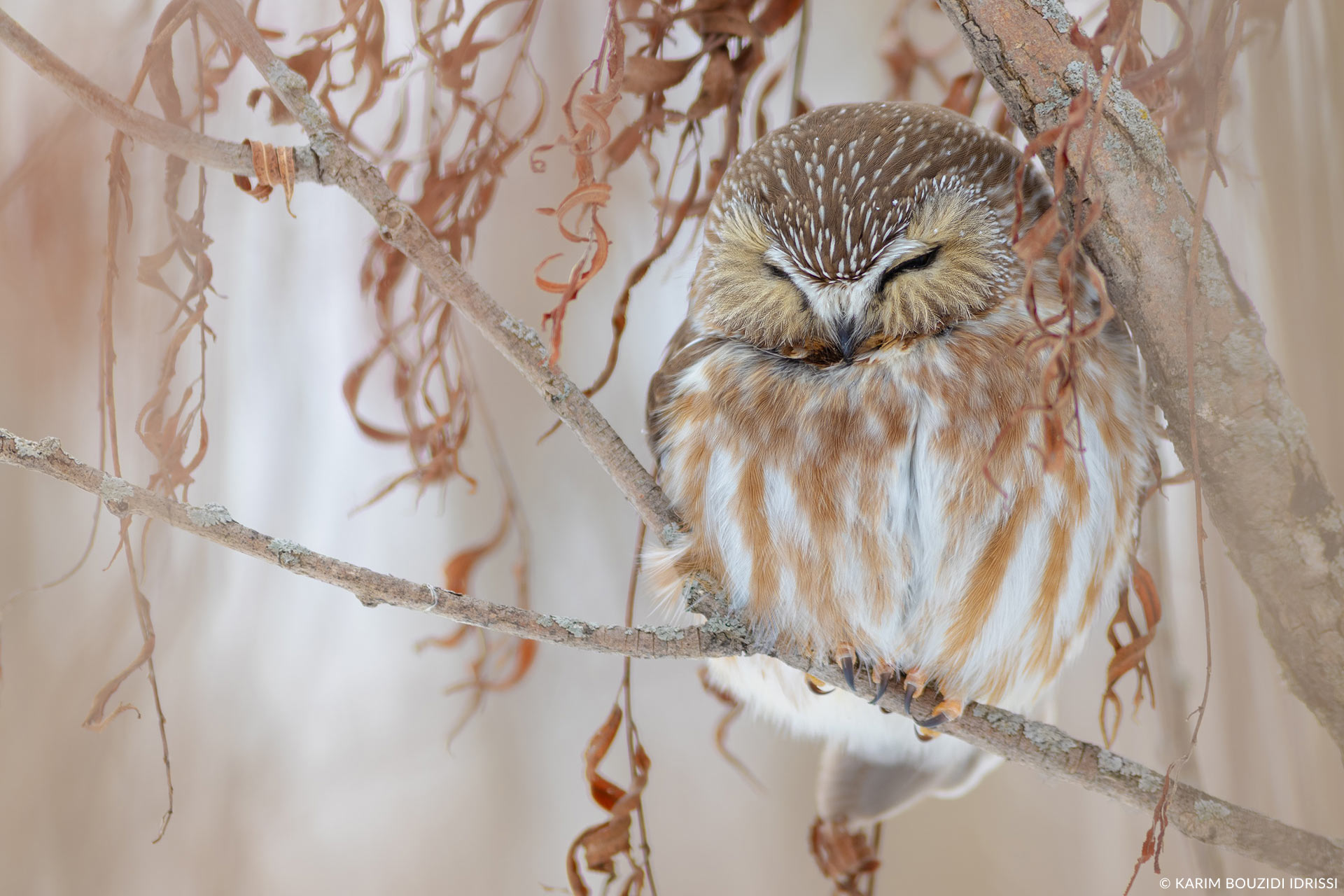
Northern Saw-whet Owls are strictly nocturnal, becoming active shortly after sunset and remaining active throughout the night. Their nightly activity patterns shift with seasonal changes in daylight, weather conditions and prey movements.
Although generally solitary, these owls maintain relatively small home ranges that provide access to reliable food and shelter. In northern regions, some individuals migrate short distances southward during winter in response to declining prey availability and harsh weather, while others remain resident if food remains abundant. Their movements and daily behaviour are strongly influenced by prey populations, snow cover, temperature and seasonal light conditions.
Range
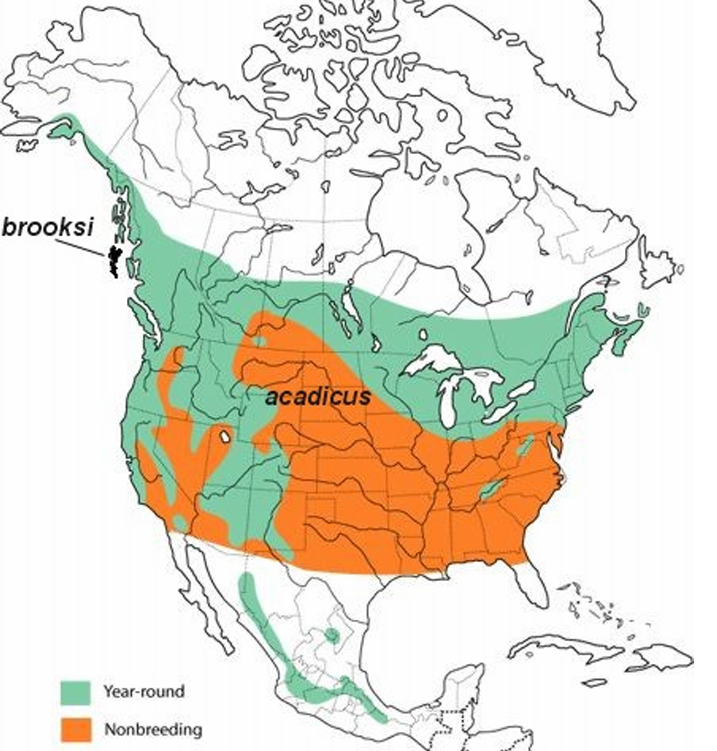 Credit: COSEWIC 2006
The Northern Saw-whet Owl occurs throughout most of Canada, from British Columbia to Newfoundland and Labrador, extending north into the southern boreal forest. Its range closely follows the distribution of forested habitat and excludes only the treeless tundra and the High Arctic.
Populations are widespread but unevenly distributed, reflecting regional differences in forest structure and prey abundance. Because of their small size and secretive habits, population numbers are difficult to estimate, but the species is considered common wherever suitable habitat exists.
 Credit: Government of Canada
In addition to mainland populations, Northern Saw-whet Owls also occur on Haida Gwaii, an island archipelago off the northwest coast of British Columbia. This population is geographically isolated and has been separated from mainland birds for thousands of years. As a result, owls on Haida Gwaii tend to be slightly larger and darker than their mainland counterparts.
The forests of Haida Gwaii, dominated by Western Hemlock, Sitka Spruce and Western Red-cedar, provide high-quality habitat with abundant cover and nesting cavities. However, because the islands support a relatively small and isolated population, these owls may be more vulnerable to habitat loss, introduced predators and environmental change. Limited opportunities for immigration from the mainland mean that population declines could be difficult to reverse.
Seasonal movements are common in mainland populations, particularly in autumn. Banding studies have shown that many Northern Saw-whet Owls migrate at night, sometimes travelling hundreds of kilometres. In contrast, owls on Haida Gwaii appear to be largely resident, reflecting the stable coastal climate and consistent food supply of the islands.
Feeding
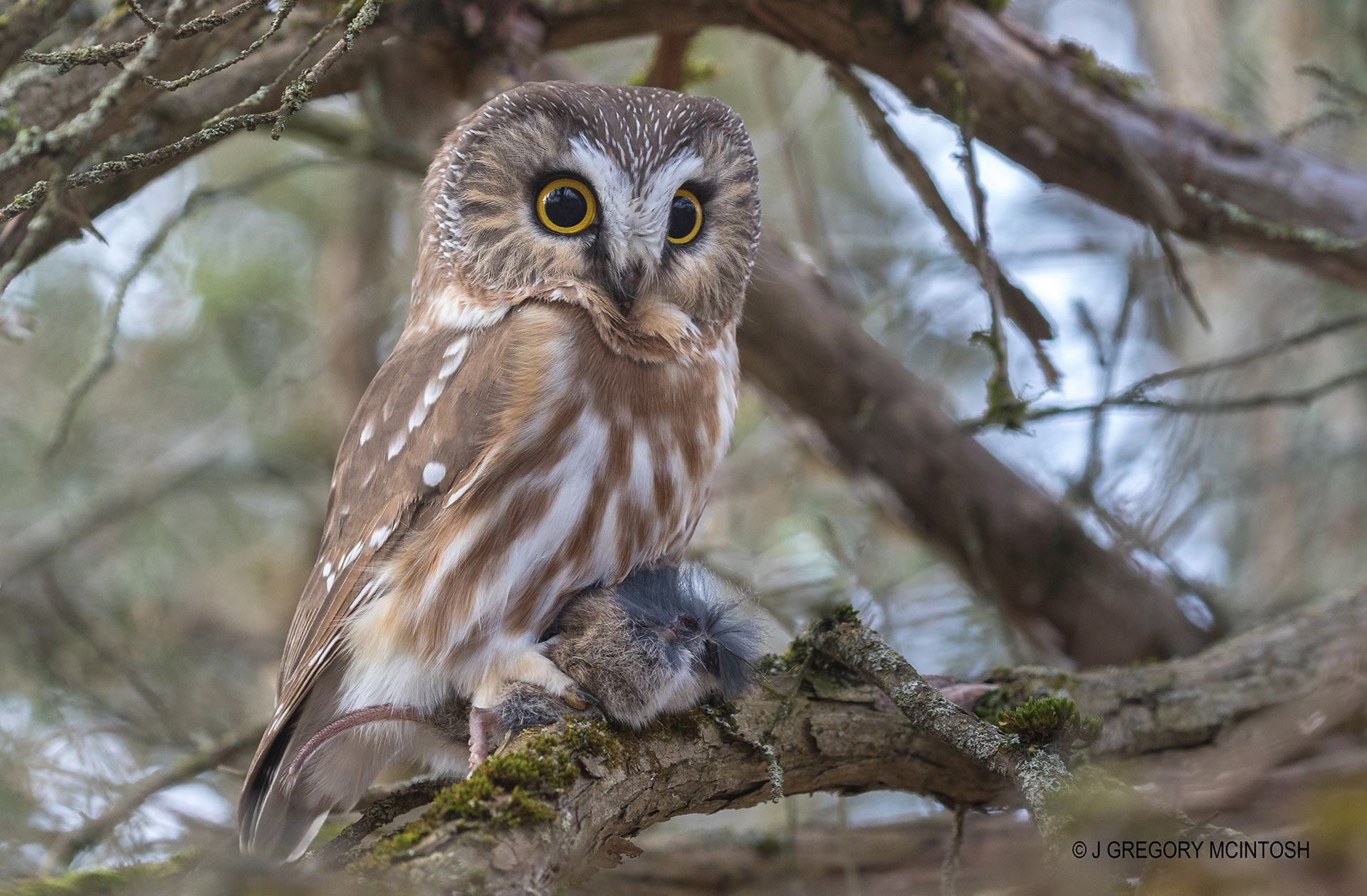 Credit: Greg McIntosh
Northern Saw-whet Owls feed primarily on small mammals, especially mice, voles and shrews, which make up much of their diet throughout the year. These prey species are abundant in forested environments and are most active at night, making them well suited to the owl’s nocturnal hunting strategy. These owls may also take small birds, large insects and occasionally amphibians
Hunting is typically conducted from low perches within the forest understorey. The owl listens intently for the sounds of movement before swooping silently toward its prey. Exceptional hearing allows it to detect animals moving beneath leaf litter, vegetation or shallow snow. Once prey is captured with the talons, it is either swallowed whole or torn into smaller pieces using the bill.
Indigestible materials such as bones, fur and feathers are compacted and later regurgitated as pellets. These pellets provide valuable insight into diet and prey availability and are often used by researchers to study owl feeding habits. During winter, Northern Saw-whet Owls may hunt along forest edges, clearings or near human structures where rodent populations are more concentrated, allowing them to survive even during periods of harsh weather.
Breeding
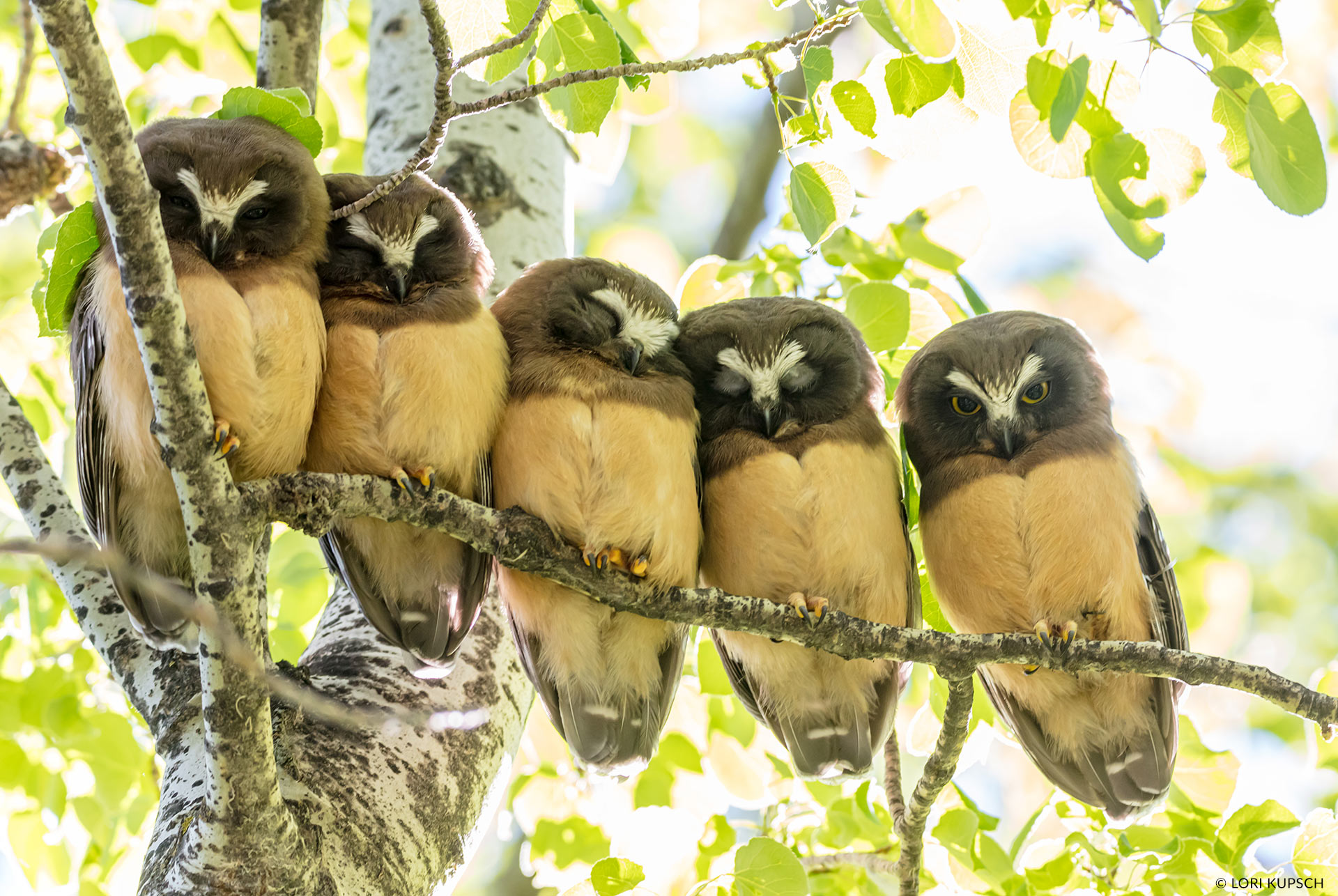 Credit: Lori Kupsch
Breeding typically begins in early spring, often while snow remains on the ground. Northern Saw-whet Owls do not excavate their own nests and instead rely on natural tree cavities or abandoned woodpecker holes, particularly those created by Northern Flickers or Pileated Woodpeckers. Nest sites are usually located several metres above the ground in mature trees that provide shelter and concealment.
Females typically lay four to seven eggs, which are incubated for approximately 26 to 29 days. During this period, the male provides food to the female while she remains at the nest. Staggered egg hatching increases the likelihood that at least some young will survive if food availability fluctuates.
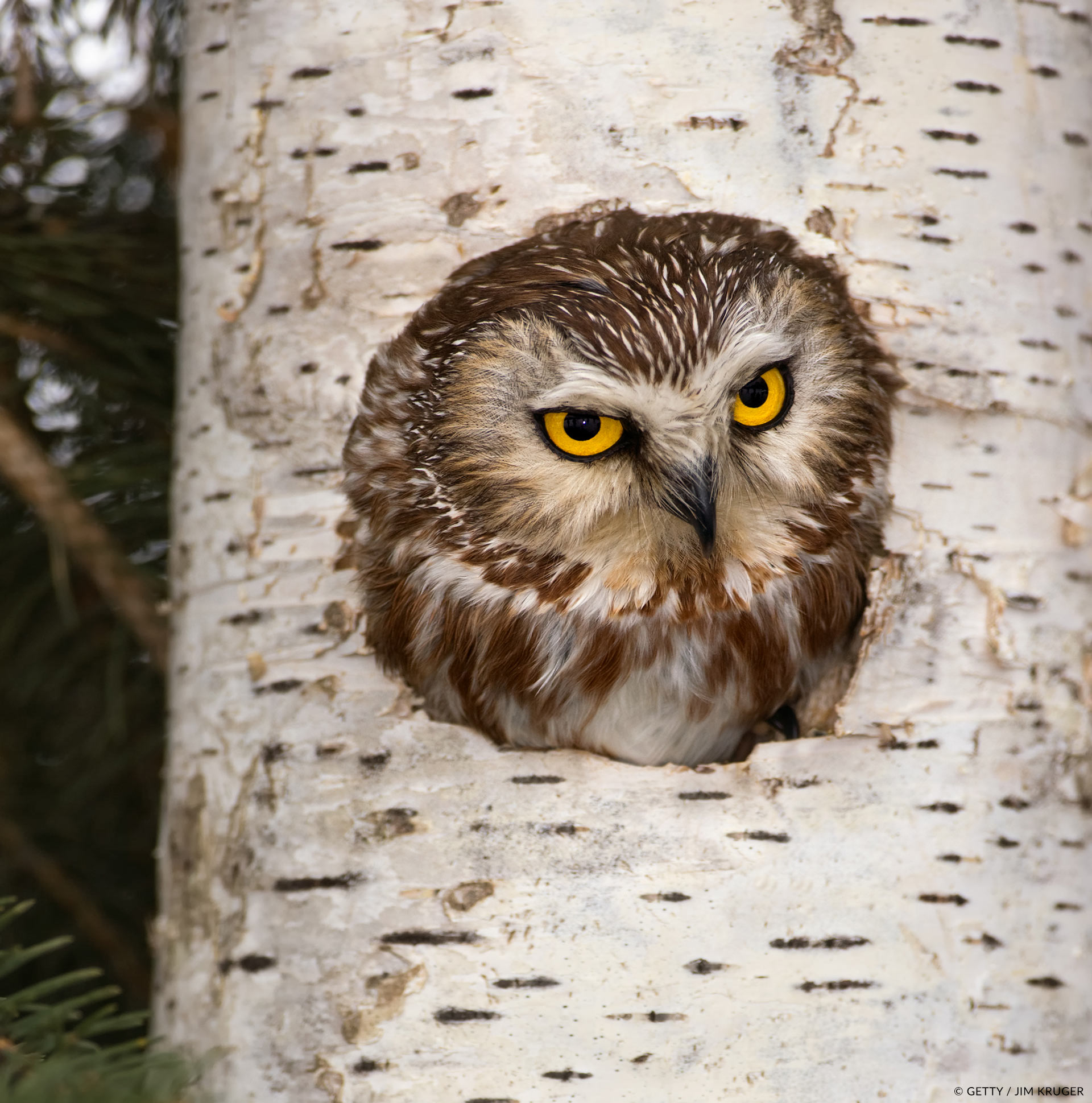 Credit: Getty / Jim Kruger
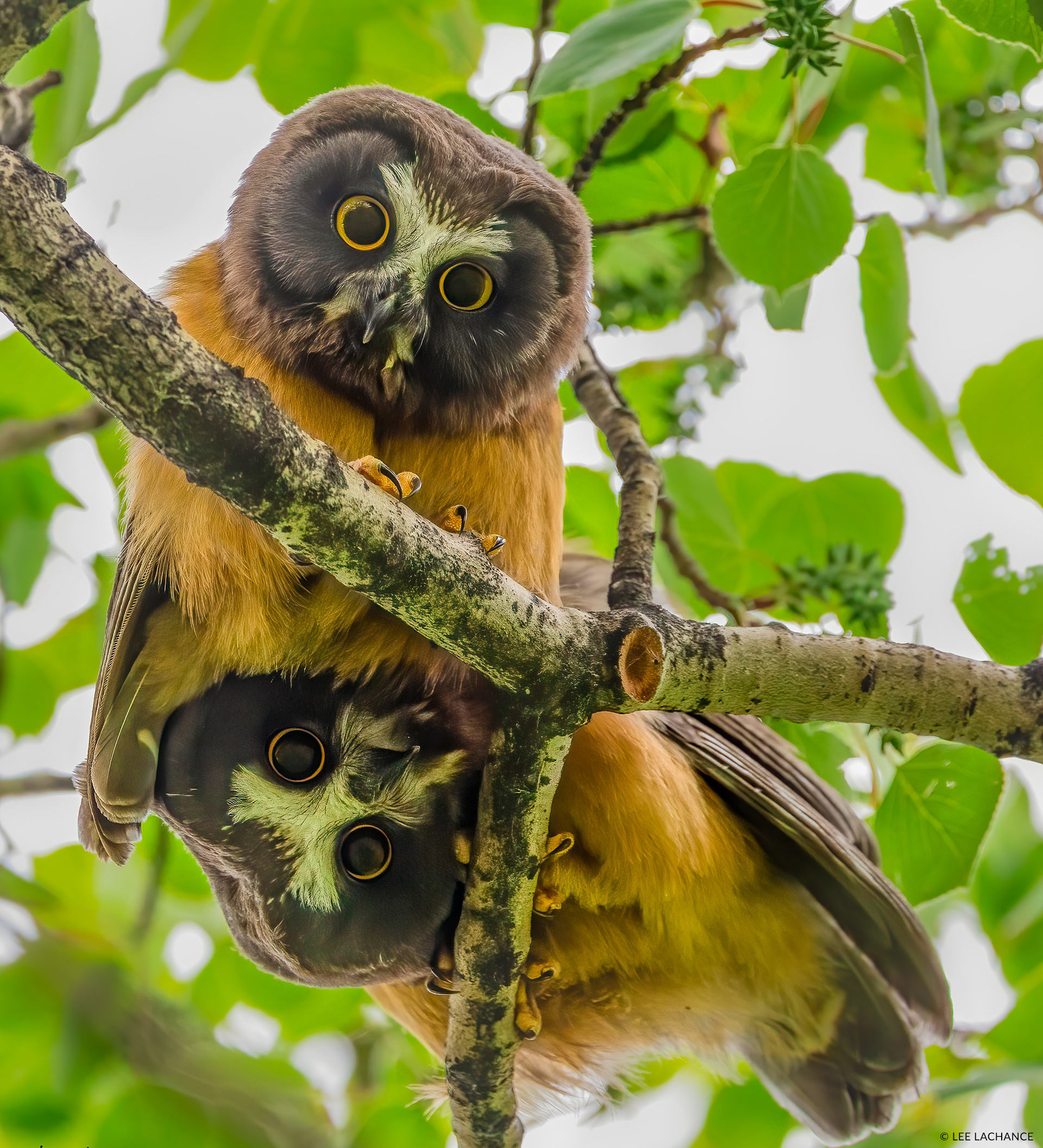
Nestlings grow rapidly and are fed primarily small mammals brought by both parents. After two or three weeks, the male takes over all parenting duties while the female leaves the nest, sometimes for a second breeding attempt with a different male. A couple of weeks later, Northern Saw-whet Owls fledge at around four to five weeks of age but remain nearby while developing flight skills and learning to hunt. Most juveniles disperse by late summer. Although individuals can live as many as seven to nine years, mortality is highest during the first year of life.
Conservation
 Credit: Lee Lachance
The Northern Saw-whet Owl is not considered at risk in Canada and is generally regarded as stable. However, its dependence on forest habitat makes it vulnerable to habitat loss and fragmentation, particularly the removal of mature trees and cavity-bearing snags.
Clear-cut logging, urban expansion and intensive forest management can reduce the availability of suitable nesting and roosting sites.
In some regions, introduced and invasive species add further pressure. Domestic and feral cats can threaten young owls and individuals roosting at low heights, while introduced mammals may alter prey populations. Invasive insects and plants can damage forests and reduce the availability of nesting cavities and cover.
Conservation efforts focus on maintaining structurally diverse forests, retaining standing dead trees and supporting research and banding programs. Protecting native ecosystems and managing invasive species are important parts of ensuring long-term population stability.
 Credit: Michael Morse
Owls have long held cultural importance for Indigenous Peoples across Canada, and the Northern Saw-whet Owl is part of this broader tradition of respect and meaning. While smaller and less conspicuous than many other owl species, it is nonetheless recognized as a creature of the night whose presence reflects the hidden rhythms of the forest. In many Indigenous knowledge systems, owls are associated with heightened awareness, perception and the ability to move between visible and unseen worlds.
Because the Northern Saw-whet Owl is nocturnal and rarely observed, it has often been regarded as a quiet watcher of the forest rather than a dominant presence. Its distinctive call, heard most often during spring, has been interpreted in some regions as a seasonal signal, marking changes in weather, animal movement or the approach of breeding cycles. Rather than being feared, small owls are often viewed as messengers or guardians of balance within the natural world.
Historically, the Northern Saw-whet Owl received little attention from early European naturalists due to its secretive habits and nighttime activity. For many years, it was considered uncommon or poorly understood. This perception changed in the mid-20th century with the development of organized bird banding programs. Large numbers of Northern Saw-whet Owls captured during autumn migration revealed that the species was far more widespread and mobile than previously believed.
 Credit: Annie Langlois
Most people encounter Northern Saw-whet Owls only rarely, often by chance rather than intentionally. Individuals are sometimes discovered roosting quietly in dense backyard trees, shelterbelts or forest edges during winter, when foliage is sparse and owls are more visible. These encounters can be surprising, as the owl’s small size and calm behaviour contrast sharply with popular perceptions of owls as large and imposing predators.
Northern Saw-whet Owls are generally tolerant of human presence when undisturbed. When approached too closely, however, they may become stressed. For this reason, wildlife professionals and educators emphasize observing from a distance and avoiding prolonged disturbance, particularly during the breeding season or when owls are roosting.
This species of owl plays a practical role in human-modified landscapes by helping control small rodents that are considered pests, including mice and voles.
Northern Saw-whet Owls have become especially important in scientific research. Their predictable autumn movements and willingness to enter mist nets have made them a focal species for long-term banding programs across Canada. Data collected from these programs help scientists track migration routes, assess population trends and evaluate the impacts of climate change and habitat alteration.
Through education programs, citizen science initiatives and wildlife monitoring projects, the Northern Saw-whet Owl has helped increase public awareness of nocturnal wildlife and forest conservation. By learning to coexist with species that are rarely seen but ecologically important, people contribute to the protection of healthy forest ecosystems that benefit both wildlife and human communities.
What we can do
 Credit: Nina Stavlund
You can help protect Northern Saw-whet Owls by supporting healthy forest ecosystems:
- Protect mature forests and cavity trees whenever possible
- Leave standing dead trees where safe, as they provide nesting and roosting sites
- Support sustainable forestry practices that retain forest structure
- Learn and share knowledge about owls and their role in forest ecosystems
Resources
 Credit: Jacuie Dankner
- Birds Canada. (2023). Northern Saw-whet Owl (Aegolius acadicus). Birds Canada Species Profile.
- COSEWIC (Committee on the Status of Endangered Wildlife in Canada). (2018). Wildlife Species Information: Northern Saw-whet Owl. Government of Canada.
- Environment and Climate Change Canada. (2022). Status of Birds in Canada: Northern Saw-whet Owl. Government of Canada.
- (2023). Aegolius acadicus – Northern Saw-whet Owl. NatureServe Explorer.
- Poole, A. (Ed.). (2005). The Birds of North America: Northern Saw-whet Owl (Aegolius acadicus). Cornell Lab of Ornithology, Ithaca, New York.
- Rasmussen, J.L., Sealy, S.G., & Cannings, R.J. (2008). Migration patterns and seasonal movements of Northern Saw-whet Owls in North America. Journal of Raptor Research, 42(2), 123–134.
- Cannings, R.J. (1993). Northern Saw-whet Owl. In The Birds of British Columbia, Volume 2. Royal British Columbia Museum.
- Marks, J.S., Cannings, R.J., & Mikkola, H. (1999). Family Strigidae (Typical Owls). In J. del Hoyo et al. (Eds.), Handbook of the Birds of the World, Vol. 5. Lynx Edicions.
- Parks Canada Agency. (2021). Forest Owls of Canada: Northern Saw-whet Owl. Government of Canada.
- Project Owlnet. (2022). Saw-whet Owl Banding and Migration Research in North America.
- Hinterland Who’s Who. (2023). Northern Saw-whet Owl. Canadian Wildlife Service. hww.ca