



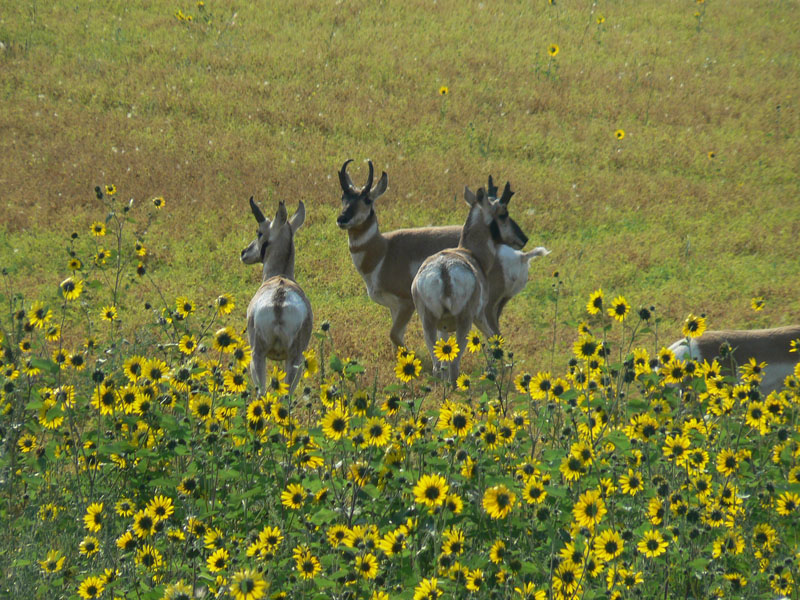

 Canada’s Grasslands (30 seconds)
 What is a grassland? | Types of grasslands | Where are grasslands? | What lives in a grassland? | What threatens a grassland? | What can we do? | Resources
Grasslands
Canada’s grasslands:
- Are a critically important habitat for Canadian wildlife
- Are only 1/4 of their original size
- Are home to thousands of mammals, birds, amphibians, and plant species, many of which can’t exist in any other type of habitat
- Are the subject of many fascinating and extensive conservation efforts
What is a grassland?
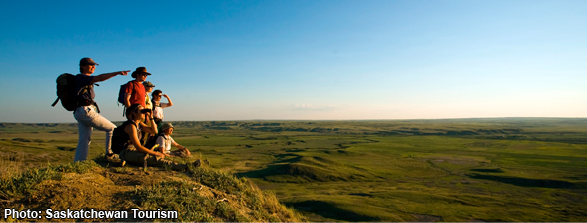
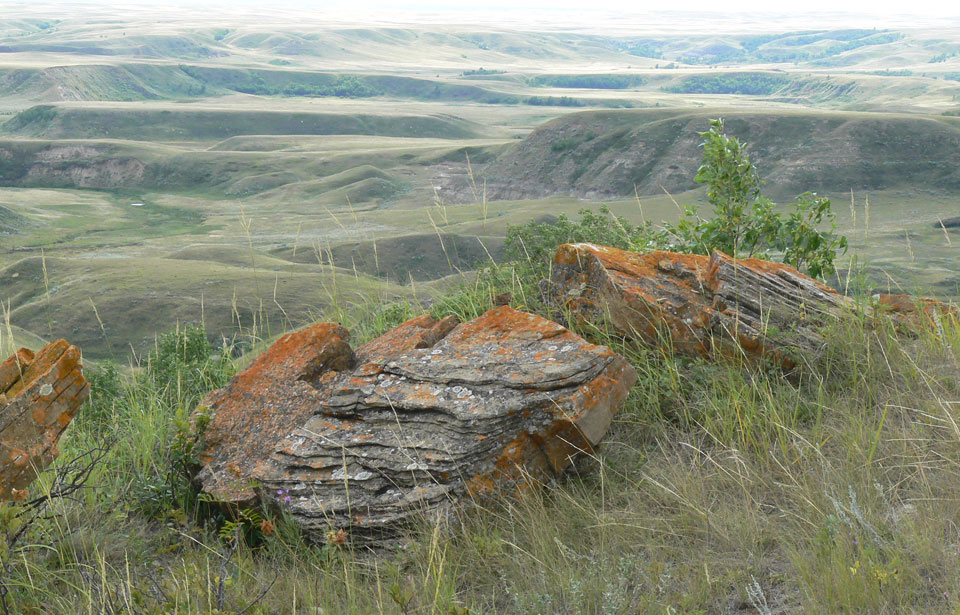
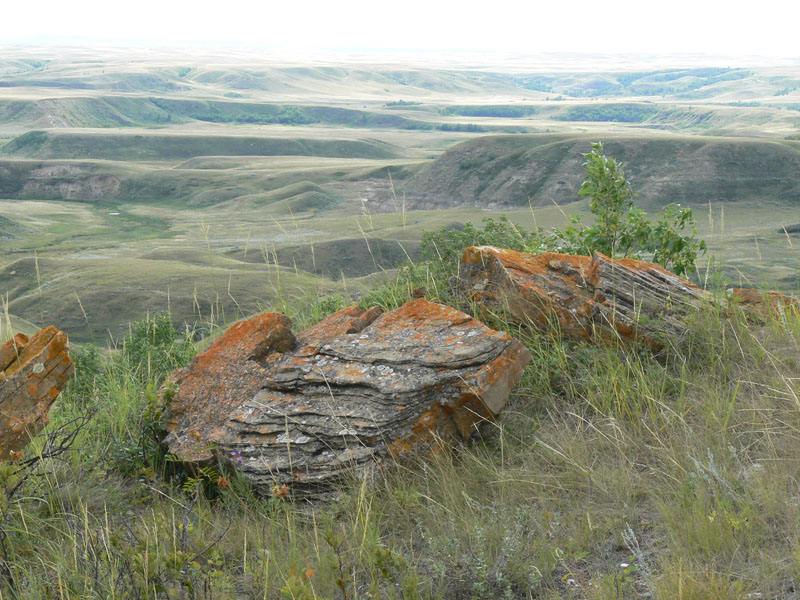
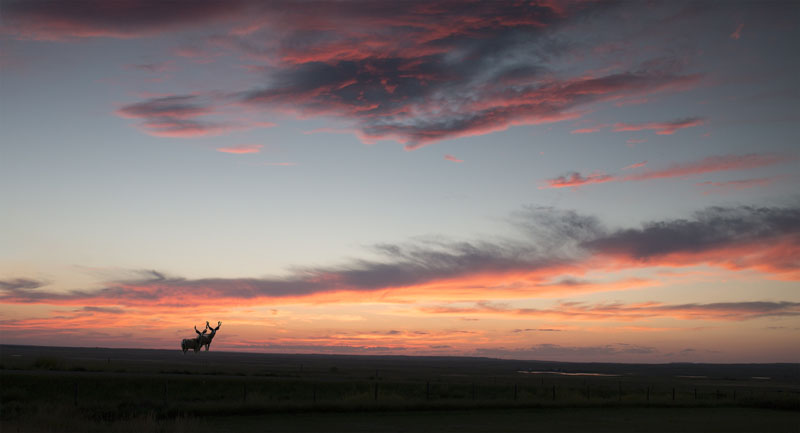
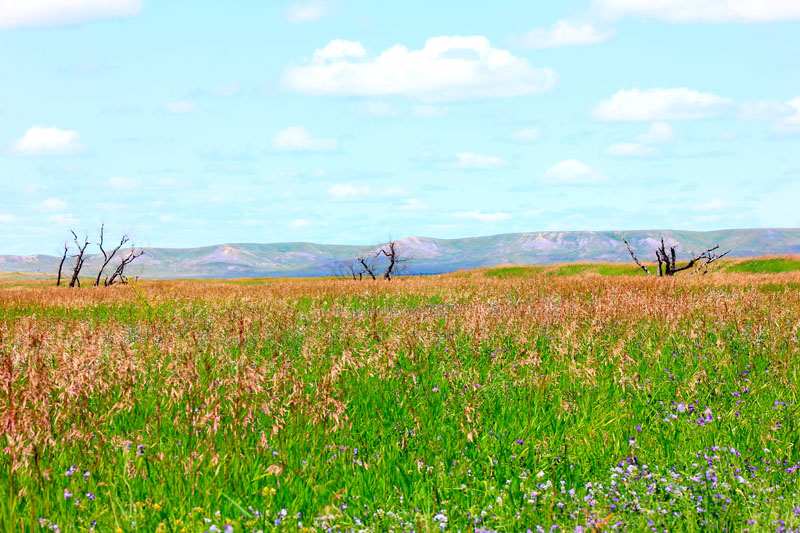
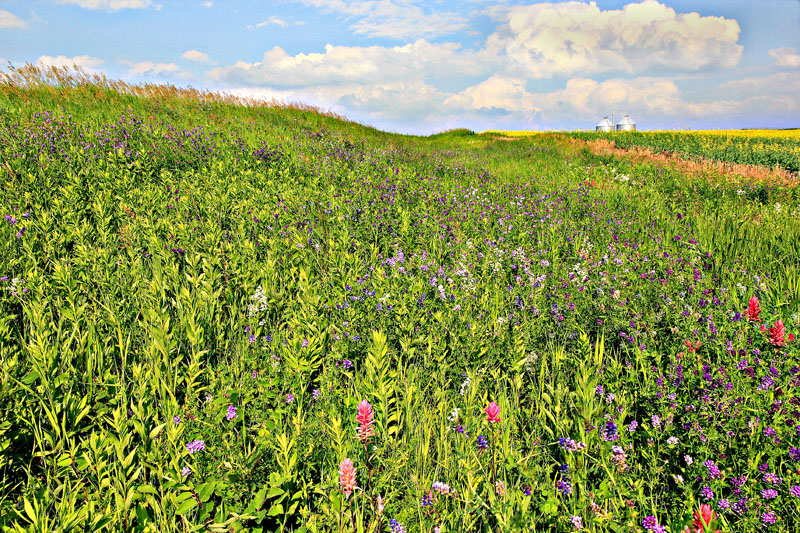
Grasslands are amazing, mind-bending places that support an incredible diversity of life—but they may not appear that way at first. Take a look at the photograph above. Before Western settlement, First Nations and Métis peoples looked across this landscape and saw the potential for hunting bison for food, fuel, and fur. In the nineteenth Century, settlers arrived at the prairie grasslands, once considered the Final Frontier of the Canadian West, and saw rich, vast ranch land for grazing cattle, and fertile soil for plowing and planting crops.
With less than ¼ of the Canada’s original grassland habitat remaining, what do we see in it now?
We see a Ferruginous hawk swoop down to capture a Richardson’s Ground Squirrel; we see expansive river valleys that dwarf the human form; we see a Prairie Rattlesnake glide past a Prickly Pear Cactus and a herd of bison grazing on feathery Blue Grama Grass.
In short, we’ve come to see the grassland as a resilient, critically important ecosystem that supports hundreds of specially adapted plant, mammal, bird, and reptile species that can only live in this special wilderness. Fascinating predator-prey relationships, specially-adapted grasses and rare flowering plants, glacial formations that fascinate geologists—these are just a few of the elements that characterize Canada’s grasslands, one of our most important, and most threatened, natural spaces.
Types of grasslands
Tropical Savannah and Temperate Grassland are largely distinguished by differences in temperature and rainfall, both critical elements to a grassland’s formation. An area that receives very little rain becomes a desert; an area that receives significant amounts of rain often develops into forest. Grasslands hang in the balance between these two conditions.
Tropical Sannavahs, found in Africa, Australia, South America, and Indonesia, stay warm all year. They receive 50 to 130 centimetres of rain during the wet season (6 – 8 months) and endure drought for the remainder of the year. Plant and animal species vary greatly across the Savanna, curbed by differences in climate, but much of the Savanna is characterized by thin soil where only grasses and flowering plants can grow. Like Canada’s grasslands, this ecosystem supports an astonishing diversity of species—the African savanna, for example, is home to some iconic animals, including giraffes, zebras, lions, and vast wildebeest herds.
Temperate Grasslands, which include Canadian grassland ecosystems, are found around the globe. Plant and animal species in temperate grasslands are shaped by less rainfall (25 – 90 centimetres), and cycle through a greater range of seasonal temperatures. Many temperate grassland animals, which must adapt to dry, windy conditions, are recognizable to Canadians: grazing species like antelope and elk; burrowing animals like prairie dogs and badgers; and predators like rattlesnakes and coyotes. For more information on the plants, birds, and animals that call Canada’s grasslands home, see “What lives in a grassland?”, below.
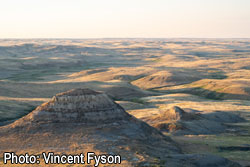
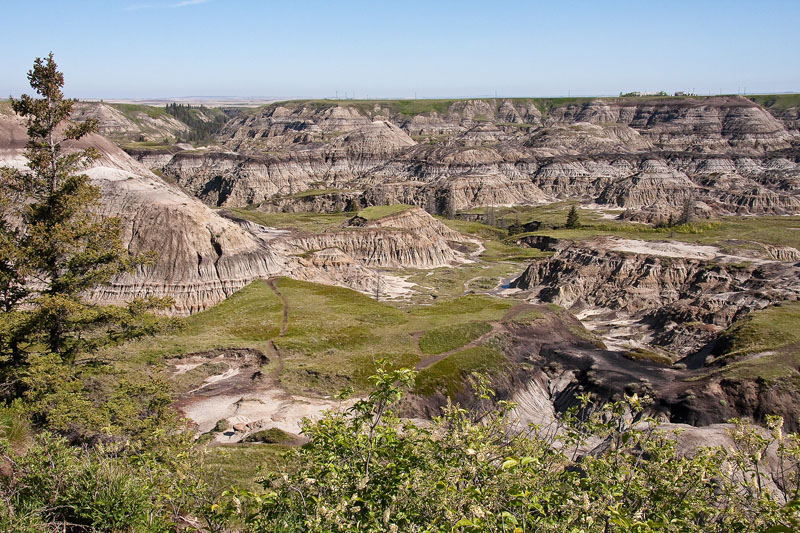
Badlands in the East Block portion of Grasslands National Park, Sask.
The dramatic contours of Canada’s grasslands are the result of glacial movement and melting ice that have shaped this landscape over the past two hundred million years. Grasslands National Park, for example, boasts glacial meltwater channels and features plateaus, coulees, buttes that rise abruptly at the horizon. Layers of rock on the prairie hold fossilized secrets from the last 80 million years.
Left: Badlands in the East Block portion of Grasslands National Park, Sask.
Where are grasslands?
High seasonal temperatures and low precipitations are a perfect formula for prairie habitats which, a long time ago, covered 25% of the Earth’s surface.
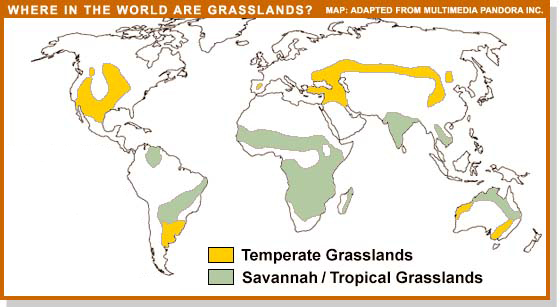 (Map: Grasslands Conservation Council of British Columbia)
In North America, grassland ecosystems are found largely in the Great Plains, which begin in the Gulf of Mexico, cut a swathe through the United States, and end in Canada’s prairie provinces (Alberta, Saskatchewan, and Manitoba). Smaller pockets of grassland ecosystems are also scattered through southern Ontario and the dry eastern side of British Columbia’s north-south mountain ranges, each with their own unique biodiversity. Today, only ¼ of Canada’s original grasslands still exist. Significant parts of it are formally protected, as in the case of Grasslands National Park, Saskatchewan, and others are stewarded by cattle ranchers and Indigenous rights-holders, who’s careful management protects much of the natural biodiversity that rely on this unique ecosystem.
What lives in a grassland?
Grasslands are home to thousands of native plant and animal species in Canada—that’s an incredible diversity of life, all sharing a very complex ecosystem with particular challenges and rewards. Mammals, insects, birds, reptiles, and plants all co-exist in a balance that astonishes the imagination. Because such a small portion of Canada’s original grasslands remain today, many of these species are under significant threat. Below are just a few examples chosen from Canada’s immense grassland biodiversity.
Mammals
Black-tailed prairie dog

The highly social black-tailed prairie dogs are considered a Threatened species in Canada because of their restricted distribution (today, they are only found in the lower Frenchman River Valley in Saskatchewan). Not only are black-tailed prairie dogs an important food staple for a variety of predators, but their abandoned burrows shelter many grassland species, including the endangered burrowing owl. Conflicts with land managers, disease, and significant habitat loss have decreased the black-tailed prairie dog’s population to a fraction of its original size; in an example of crucial co-dependency, this population decline is in turn largely responsible for the extirpation of the black-footed ferret.
Plains bison
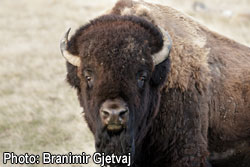
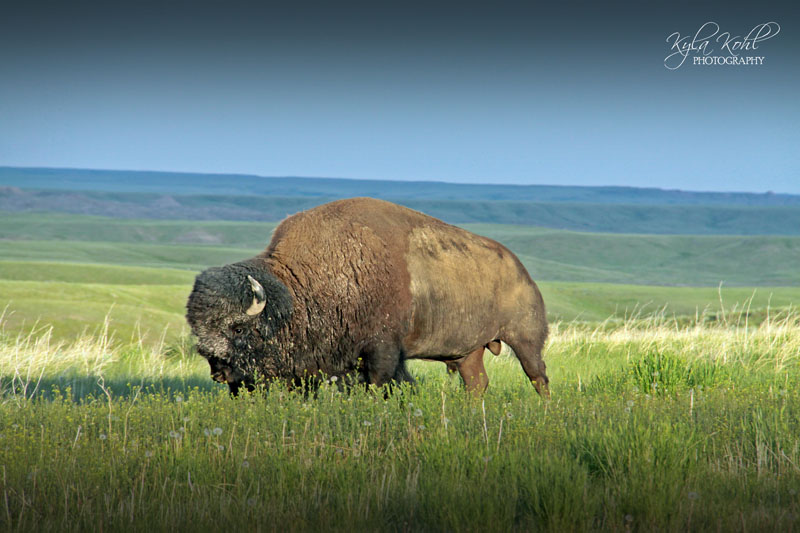
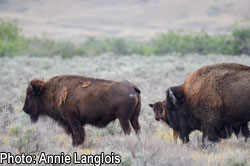
Two hundred years ago, anywhere from 30 to 70 million bison roamed across North America, grazing on native grasses and providing food, clothing, and even shelter for Indigenous Peoples, who built their teepees from buffalo hide. Within the span of a few decades late in the 19th-Century, habitat loss and economic exploitation drove bison to the edge of extinction. Reintroduction efforts, including 2005’s release of 71 plains bison to Grasslands National Park are gradually restoring this impressive mammal to its natural habitat. To learn more, visit the bison fact sheet.
Pronghorn

Pronghorn can run up to 100 kilometers an hour and is one of the fastest mammals in the world, second only to the cheetah. This speed reveals it as a true master of the North American grassland—the only place in the world where it exists, giving us another important reason to preserve this habitat.
Black-footed ferret
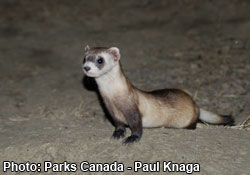
The exquisitely cute black-footed ferret, which relies almost exclusively on the black-tailed prairie dog for food and shelter, is the only ferret species indigenous to North America—and it was very nearly lost to us forever. Until a Wyoming farmer’s dog discovered a small colony in 1981, researchers feared that habitat loss and rapidly declining food sources had pushed this species into complete extinction. From the Wyoming colony, captive populations were gradually developed in facilities across North America. Attempts to reintroduce black-footed ferrets to Canada in recent decades have been unsuccessful. Visit the black-footed ferret fact sheet to learn more.
Swift fox
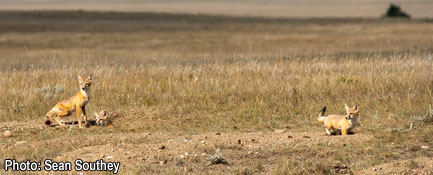
Swift foxes are a clear example of the unique adaptations undergone by grassland species to suit their habitat: unlike nearly every other fox species, swift foxes use dens throughout the entire year—both as a place to raise their young, and as shelter from predators in a landscape with few other places to hide. Swift foxes have been clocked at more than 60 kilometers per hour, a speed which helps them reach shelter quickly in moments of danger. Swift foxes vanished from the Canadian prairies during the 20th century, mostly due to over-hunting coupled with severe winters and droughts. Reintroduction programs have greatly helped to reverse this trend, though today the species remains “threatened” in Canada. Visit the swift fox fact sheet to learn more.
Reptiles and amphibians
Prairie rattlesnake
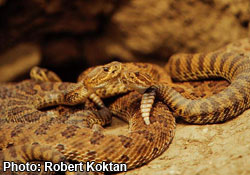
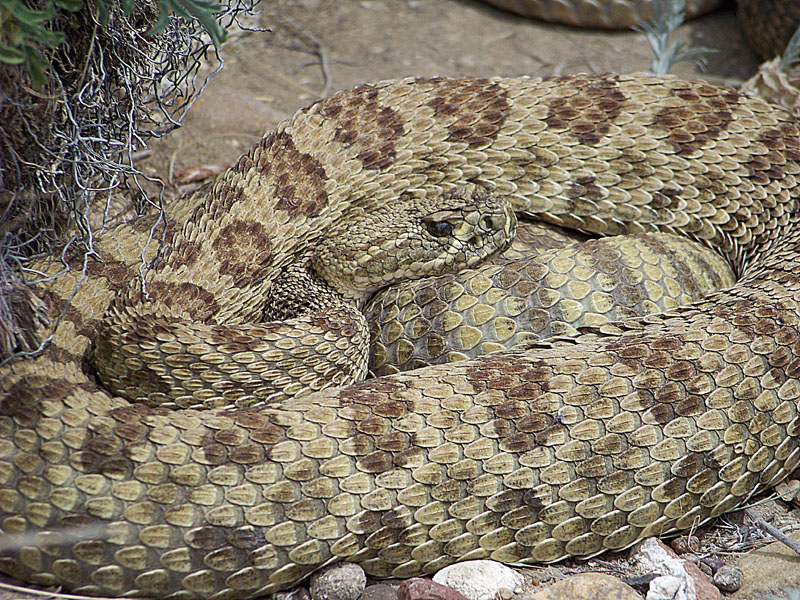
The prairie rattlesnake, whose name comes from rings on its tail which knock together when agitated, is the only venomous snake on the Canadian prairies. Using its tongue as a smell- and heat-sensing membrane, it can detect prey (mostly small mammals and amphibians) from 30 metres away. Because it is cold-blooded, the prairie rattlesnake must hibernate in caves and abandoned mammal burrows to survive the grassland’s cold winters—another example of complex co-dependency between grassland species.
Birds
Burrowing owl
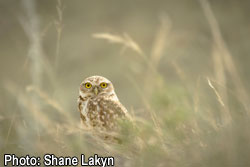
The burrowing owl, a small, sturdy bird that, unlike most other owl species, nests in abandoned underground burrows and mimics the hiss of a rattlesnake for protection, is one of the most endangered birds in western Canada. To learn more, visit the burrowing owl fact sheet.
Ferruginous hawk
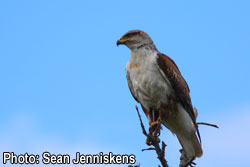
This handsome bird, North America’s largest hawk, is a great help to pasture managers and ranchers: during nesting season, a breeding pair can devour almost 500 small mammals, including ground squirrels and prairie dogs. Habitat loss and declining food sources have put this hawk on Canada’s “threatened” list, though human-made artificial nesting structures and other protective measures are helping support its remaining population.
Long-billed curlew
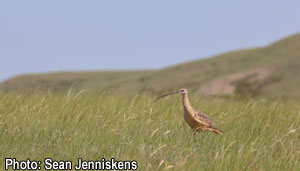
The long-billed curlew, a migratory bird that winters on the shores of the Gulf of Mexico and returns to the Great Plains during breeding season, is our continent’s largest shorebird. Their extremely long, down-curved bill is well adapted to a prairie diet of invertebrates, such as grasshoppers and earthworms. Habitat loss and a disproportionate increase in predators are contributing to a decline in the long-billed curlew’s population; it is considered a species of “Special Concern” in Canada.
Thick-billed longspur
After returning each spring from their southern wintering grounds, this sparrow-sized migratory bird relies on North America’s grassland prairie as a breeding habitat. Human land use and fire suppression (a relatively modern threat to grassland habitats, whereby human intervention in wildfire incidents results in forest encroachment – see “What threatens a grassland?”, below) have reduced this bird’s habitat. Nonetheless, they are detected in higher numbers in Alberta’s southern grasslands, where continuous grazing by cattle, and in some places, bison help maintain ideal conditions for this and other birds.
Insects
Mormon metalmark butterfly
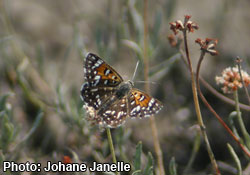
This striking grassland insect relies on the branched umbrella-plant both as a critical food source and as a host for laying eggs. There are two known populations of this butterfly in Canada. The southern mountain population, found only in the southern interior of British Columbia, is an endangered species, with only about 100 individuals remaining. The prairie population, listed as Special Concern, has not been thoroughly studied, though researchers estimate that anywhere from 200 to 1000 individuals remain. Habitat loss and agriculture threaten the umbrella plant, listed as a species of “Special Concern,” which in turn compromises metalmark populations.
Plants
Blue grama grass

It’s a funny thing that the whimsical-looking Blue Grama grass, shaped like a tufted toothbrush or eyelashes, is the historical favourite of the enormous bison. Not only is it one of the most palatable grasses available to grazing animals, it is also a small but mighty element in grassland restoration. Considered one of the most drought resistant grassland species, it has been used to re-vegetate disturbed or dry parts of the central Great Plains.
What threatens a grassland?
Grasslands are among the most endangered ecosystems in the world, and natural grasslands, which cover less than ¼ of their original area in Canada, are no exception. Threats include urban and agricultural development, resource development, and invasive species that crowd out native grassland plants. At the heart of each threat are the greatest dangers for grassland species: the destruction, degradation, and fragmentation of grassland habitat.
Urban and agricultural development
Expanding towns and cities in the Canadian natural grasslands compromise grassland habitat, particularly because many species, like the threatened Ferruginous hawk, will abandon wild areas that are too close to human settlement.
Farming annual crops can destroy or limit grassland biodiversity. Pesticide use and the planting of food crops are especially potent threats to native grasses. Once the grassland is broken by the plough, the protective grass, moss and lichen groundcover disappears, leaving fertile soil vulnerable to the strong prairie wind. As a result, restoring a grassland habitat that has been developed for agriculture is a long, difficult process that requires resilient plant species and a nearby renewable seed source.
However, ranching can benefit natural grasslands. Before the Homesteading Act of 1908, which closed the open range to domestic grazing, farmers’ cattle, horses and sheep moved freely across the prairies, resulting in overgrazed grasslands. Overgrazing means repeated, heavy foraging, which continues year after year until the native plant community is severely depleted and the soil begins to erode. Today, ranchers recognize this danger and are careful to rotate their livestock across different grazing sites, giving native plants the time and shelter to recover.
Historically, hunting and poaching have also significantly disrupted grassland ecosystems. Early settlers in Canada’s prairie provinces, frustrated by “pest” species like coyotes and black-tailed prairie dogs, resorted to poisoning and unchecked hunting practices. As a result, predators that relied on those species lost a crucial food source and began disappearing, as well. The domino effect of this widespread disturbance to the natural food web is still widely felt today, despite reintroduction efforts and strict hunting policies.
Encroaching Forests
Grasslands are increasingly threatened by areas where trees have managed to take root and grow. There are both human and natural causes for this phenomenon, which reduces important grassland surface area. Livestock overgrazing, for example, can disturb the healthy grass systems, compromising plants and offering opportunities for trees to germinate.
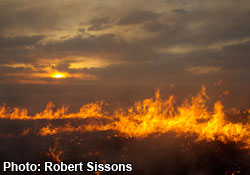
Wildfires are also an issue. Ignited naturally by a lightning strike or artificially by humans, fires add valuable nutrients to grassland soil and help chase back encroaching forests. Over the past seventy years, far fewer grassland fires have resulted in more opportunity for forests to expand into grassland territory; grazing is also a possible cause for this issue, because overgrazed grassland provides very little fuel to burn and prevents important fires from spreading as they otherwise would.
Invasive species
A significant threat to remaining grassland ecosystems is the widespread introduction of non-native plants, which often have no natural predators to reduce their population and can out-compete native plants for moisture and nutrients. As a result, these alien species are a significant threat to grassland biodiversity and are often difficult or impossible to remove once they’re established.
These alien species first appeared in Canada’s grasslands as early as the mid-19th century, when European settlers began importing seeds, deliberately or not. Relatively recent trends in grassland recreation, such as camping, hiking, and motorized vehicles, also contribute to the inadvertent spread of invasive seeds.
What can we do?
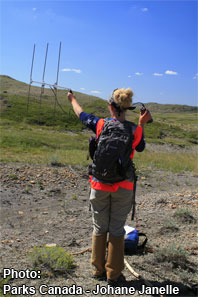
Fortunately, researchers, citizens, agricultural producers, policy makers, and environmental management teams are collaborating to preserve what’s left of Canada’s grasslands. Across the country—from ranchers to campers to government officials—Canadians have a far better understanding today than ever before of the need for balance between human activity and fragile ecosystems.
Knowledge, understanding, and cooperation are the most important tools in preserving and expanding what’s left of Canada’s grasslands. Often, a black-and-white solution to some of the greatest problems facing grassland ecosystems is simply unrealistic, and stewards must constantly experiment and adapt in order to tweak conservation strategies. Improved understanding of the role of grazing in conserving biodiversity, for example, has led policies that promote grazing to maintain healthy grassland ecosystems.
Other approaches to grassland conservation involve prescribed fires, which, under very specific circumstances and within set weather conditions, prevent tree encroachment, enrich the soil, and improve conditions for grazing wildlife. Though prescribed fire has a long history in grasslands, including First Nations people who used fire extensively and 19th-century ranchers seeking to enlarge their grazing pasture, its return to grasslands has been slow.
The reintroduction of nearly extinct species, like the bison and the swift fox, has also made small inroads into the gradual restoration of grassland biodiversity. In the case of the swift fox, that were last seen in Saskatchewan in 1928, reintroduction in 1998 has been extremely successful and their range is expanding. They were designated as Endangered in April 1998, a step up from being previously extirpated and a credit to the reintroduction efforts. Other efforts, such as the reintroduction of the Black-footed Ferret, were not so successful.
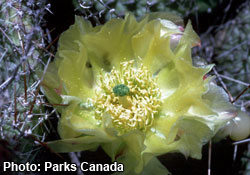 A prickly pear cactus in Grasslands National Park, Sask.
There are also small but significant steps that private individuals can follow to help restore and preserve Canada’s remaining grasslands, as well as other critical habitats. These are just a few suggestions for encouraging a healthy habitat, no matter where you live in Canada:
- Do not cultivate or develop remaining parcels of native grassland
- Turn unused farmland into grassland habitat by planting native wild grass and wild flowers. Remove invasive trees and plant species in grassland areas and garden with native plants.
- Use alternatives to pesticides.
- Build a home for a threatened Ferruginous Hawk.
- When visiting a grassland, always keep your vehicle on the road or on designated pull-offs.
Resources
Species at Risk Public Registry
© Her Majesty the Queen in Right of Canada, represented by the Minister of the Environment, 2010. All rights reserved.
Text: Megan Findlay, 2010.
Revision: Robert Sissons (Wildlife Specialist, Grasslands National Park), Pat Fargey (Species at Risk/Ecosystem Management Specialist, Grasslands National Park), and Johane Janelle (Communications Services Officer, Grasslands National Park), 2010.
Photos: Special thanks to Parks Canada, Bob Gurr, Greg Huszar, Johane Janelle, Paul Knaga, Robert Koktan, Wendy Michael, Axel Moehrenschlager, Robert Sissons, Saskatchewan Tourism, and the Calgary Zoo.
